






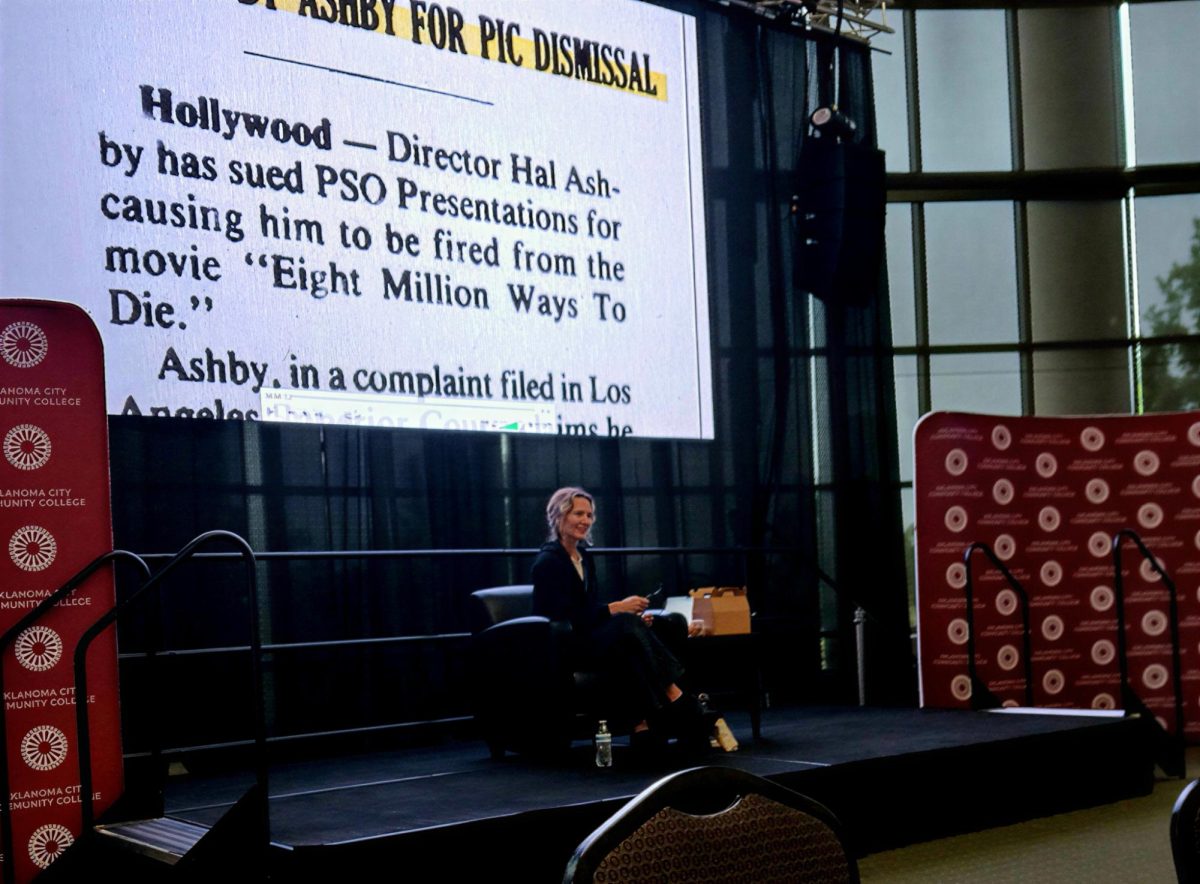








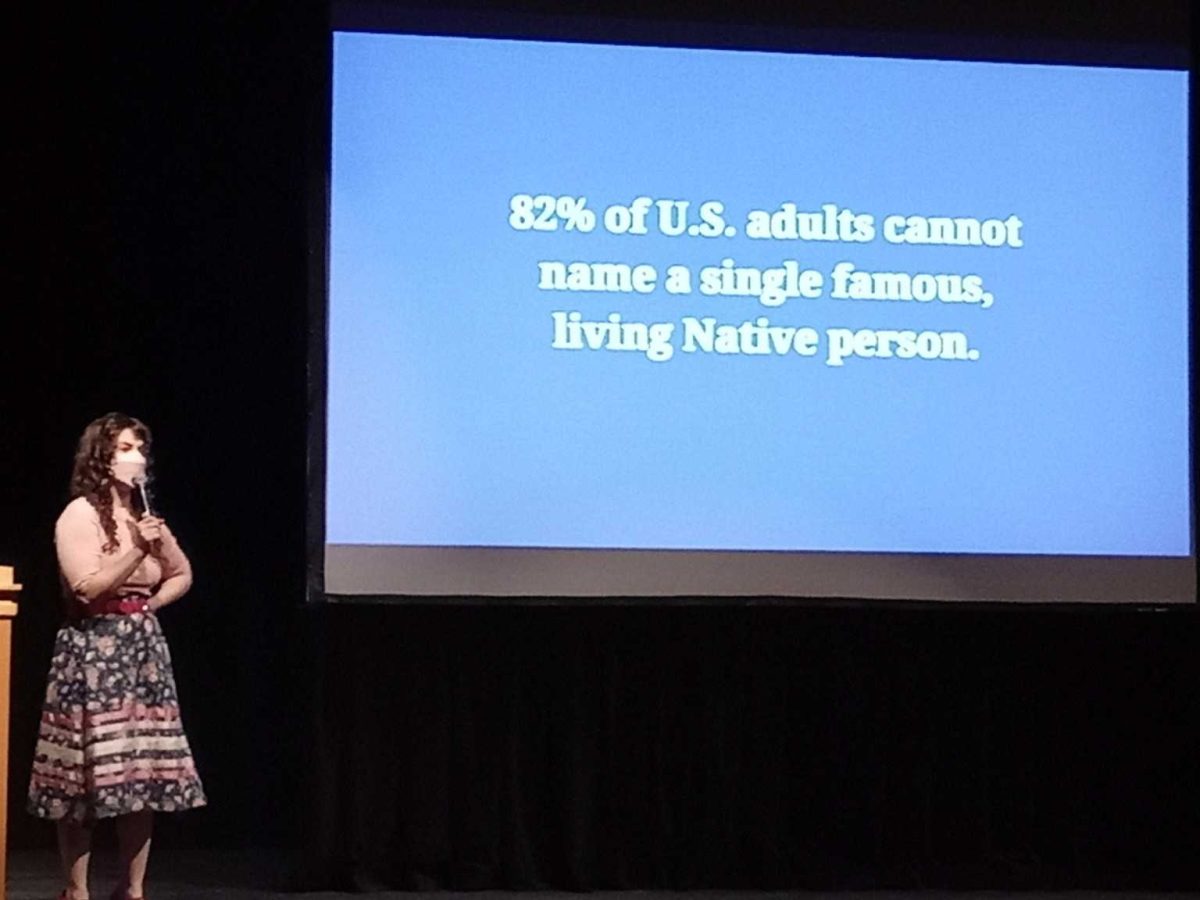
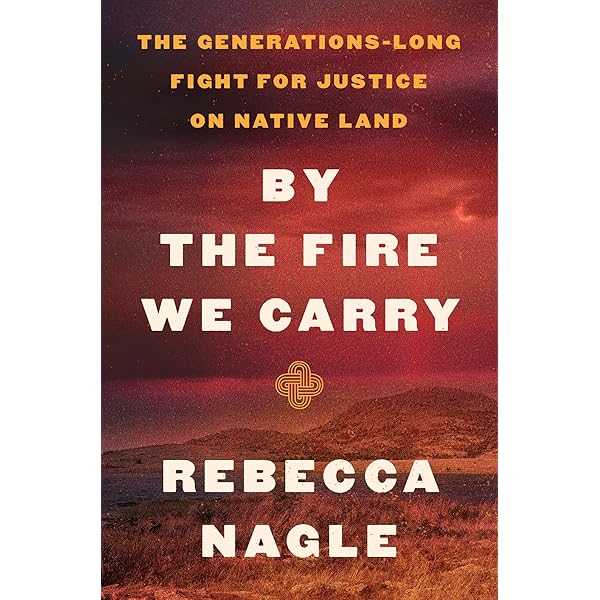
Award-winning journalist and author Rebecca Nagle, a citizen of the Cherokee Nation, recently shared an eye-opening presentation at OCCC entitled “Fighting Indigenous Erasure in the Media.” Nagle drew on her book “By the Fire We Carry” for a conversation about visibility, history and the power of storytelling.
Throughout her presentation, Nagle emphasized how Native stories are often left out of mainstream media narratives and how that absence shapes public understanding.
“We are taught that racism occurs when people are seen as other or less than,” she said. “We are not taught that racism occurs when people are not seen at all.”
Using examples from contemporary journalism, U.S. law and her own reporting, Nagle showed how Native history continues to influence the country’s legal and political systems.
“Native history is treated like a tragic, distant chapter of the American story,” she said. “But it is foundational.”
Nagle also discussed how stereotypes and misinformation persist, pointing to the kinds of questions frequently searched online about Native people, ranging from “Do Native Americans pay taxes?” to “Do Native Americans get free money?”
Before discussing policy and media coverage, Nagle began her presentation by sharing her personal roots. Her presentation included a photograph of her grandmother, who came from the community of Honey Creek near Jay, Okla.
Nagle expressed particular concern about the fact that most Americans cannot name a single famous Native American person, and even fewer can name two. She said this lack of visibility directly relates to how Indigenous issues are portrayed – or ignored – in national conversations.
In addition to publishing a book on this topic, Nagle also hosts a documentary podcast called “This Land” that investigates how Native children and tribal sovereignty cases have become sites of political conflict.
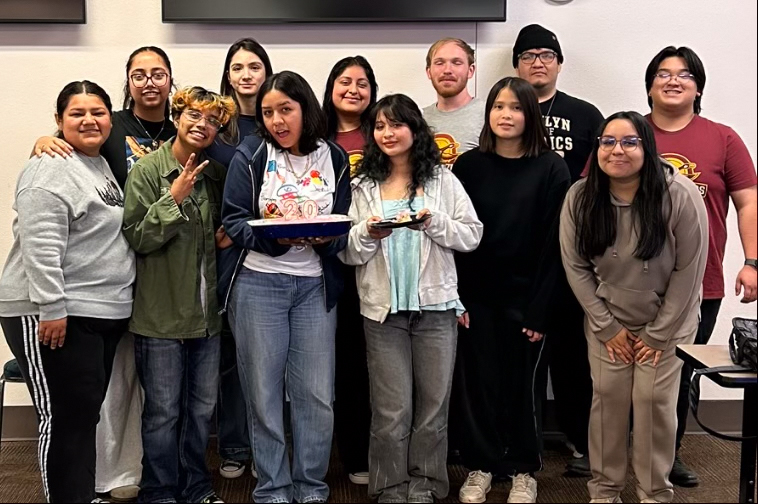
Nagle’s message resonated with attendees who were struck by how deeply historical exclusion shapes public knowledge. Her talk encouraged audience members to seek out Indigenous voices and to question what stories are missing from the media they consume.
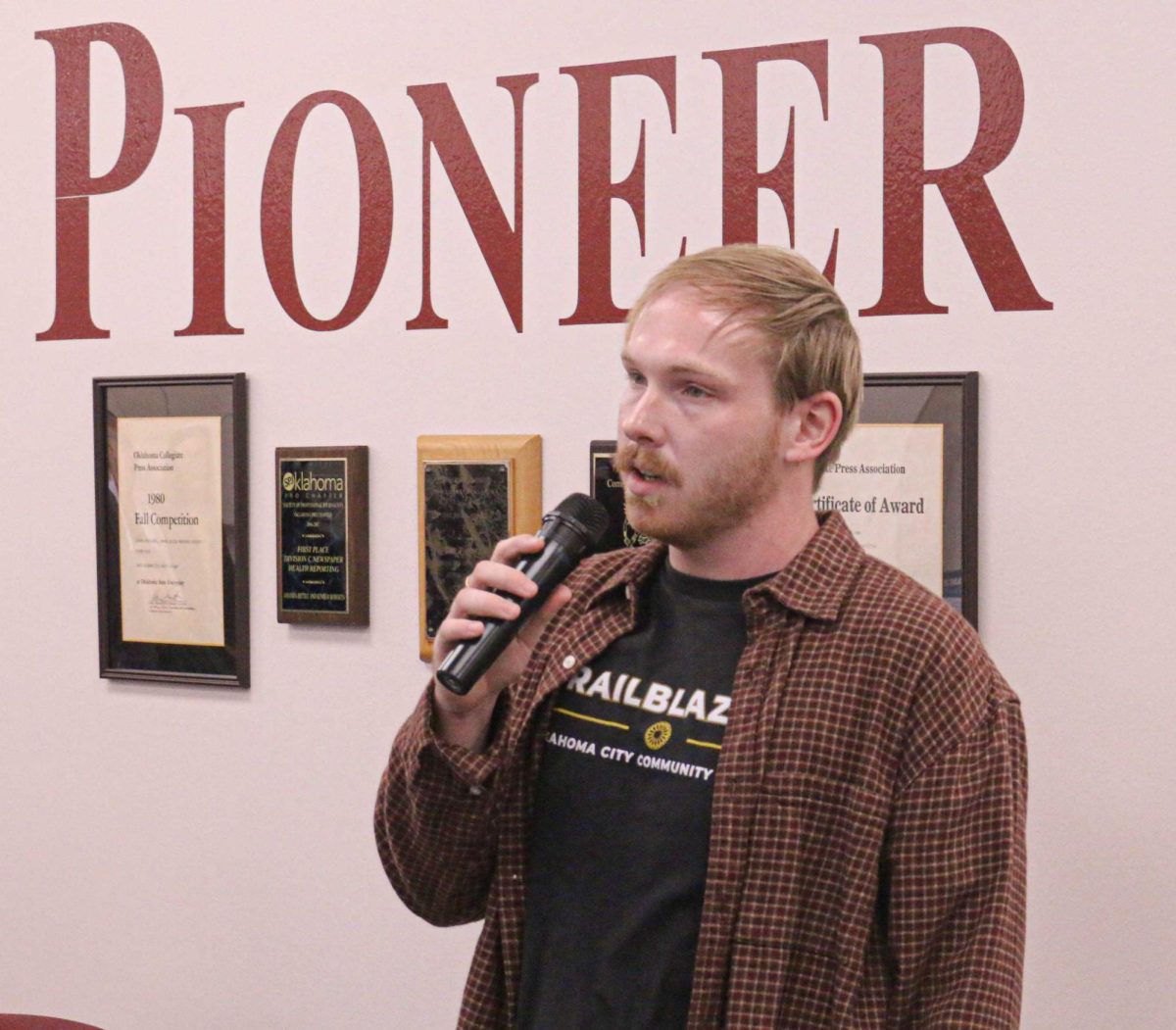
After her presentation, Nagle opened the floor for audience questions, inviting discussion about representation, storytelling and the role of education in changing perceptions. During that question-and-answer session, several audience members got a chance to ask Nagle about her thoughts on various issues ranging from specific judicial rulings to her personal experiences to whether she was planning on writing another book.
Through “By the Fire We Carry” and her advocacy, Nagle continues to challenge what she calls “the invisibility of Native people in the American imagination.” Her work serves as both a reclamation of history and a call for a more inclusive national narrative.