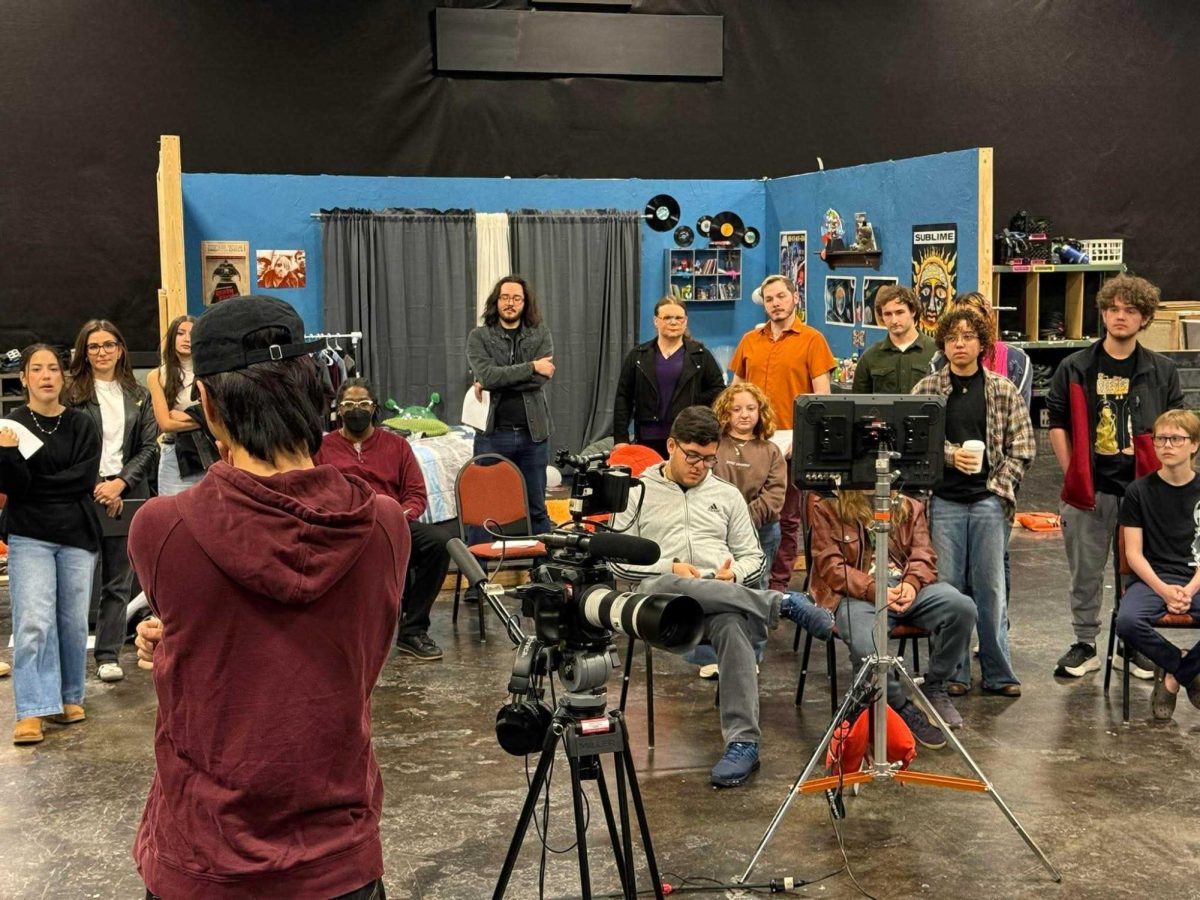

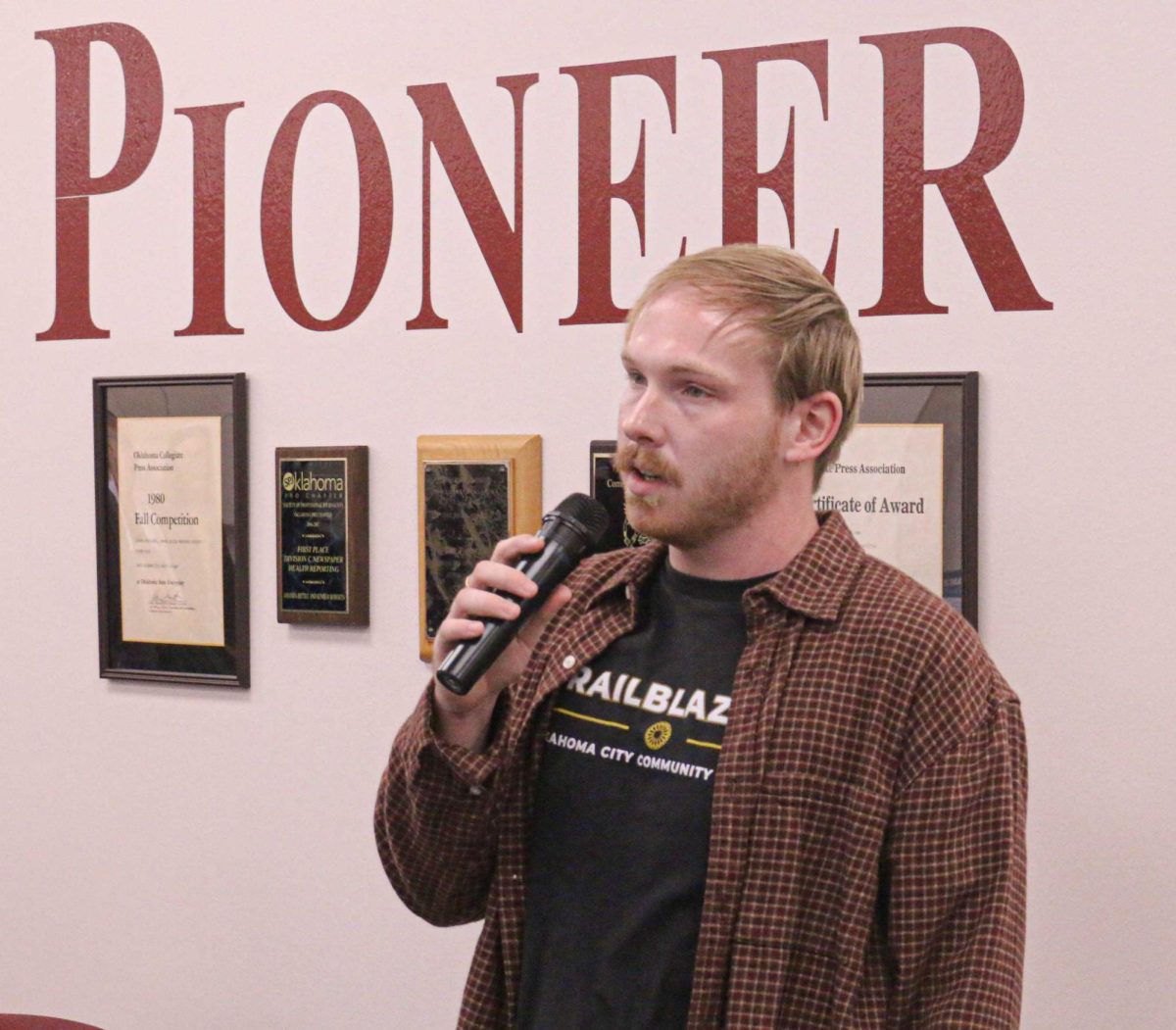














Renowned filmmakers Amy Scott, Mike Caron and Matt Payne held conversations about each of their specialties on May 19-20 during hour-long lunches in the atrium of the Visual and Performing Arts Center.
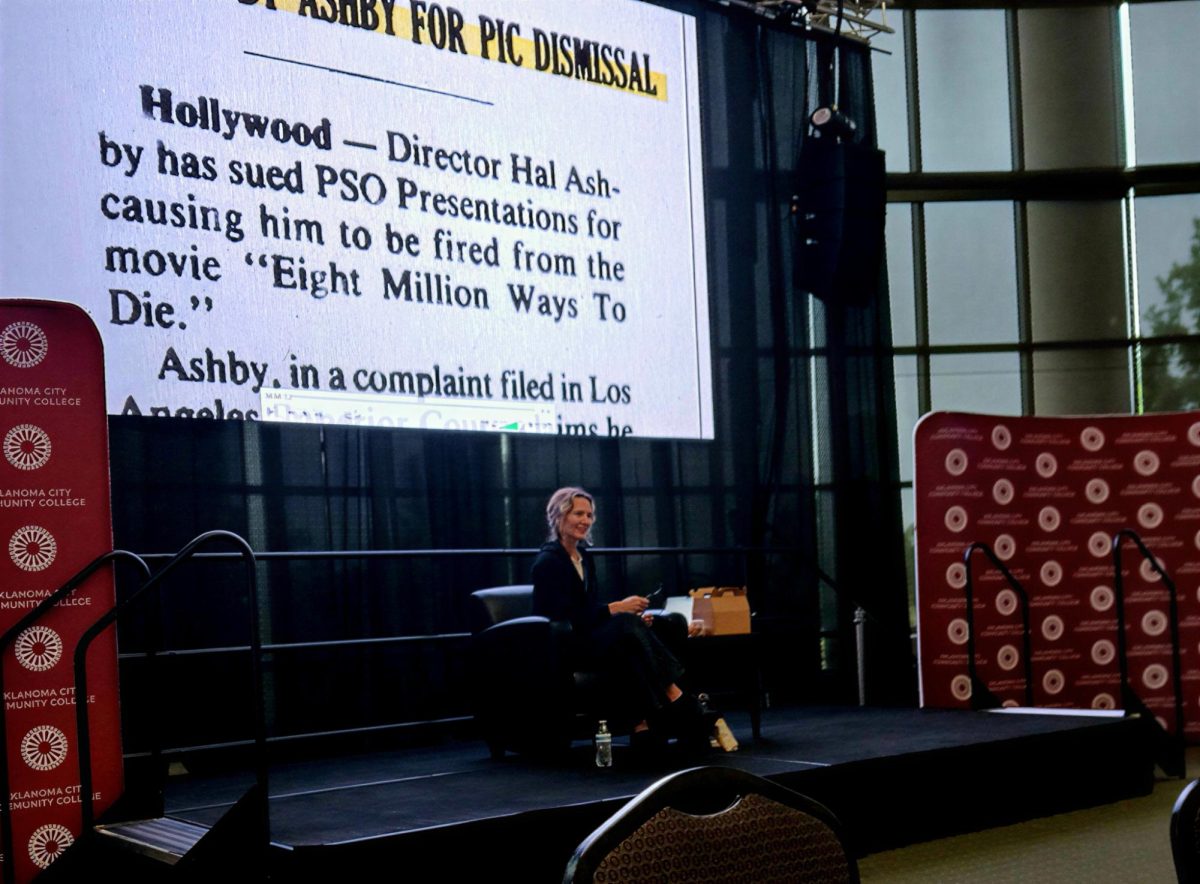
Scott led the first discussion on May 19, focusing on the art of the interview. A documentary filmmaker with more than 20 years of experience, Scott attributed much of her interviewing knowledge to her time working at the Chicago History Museum. It was through her experience digitizing audio of Studs Terkel’s interviews that she was able to learn techniques for interviewing effectively, and this knowledge would help her later in her career.
Throughout the discussion, clips from Scott’s documentaries were played to illustrate her advice about interviewing individuals for film. One piece of advice she offered was to let a prompted conversation flow in the direction the interviewee wants to take it.
“It felt like it was sort of handed to me on a platter,” Scott said. “There have been times when I’m interviewing someone, and they just delivered the thesis of the film, and I’m like, ‘Oh, thank you. That was it. We weren’t going there, but this now has given an anchor to this entire structure.’”
The theme of spontaneity continued throughout Scott’s presentation. Another piece of advice she gave was to pivot when unexpected events occur and use them as an advantage. In addition, she highlighted how important it is to let a character be totally themselves when shooting a documentary because it adds to the perspective being captured.
Scott stressed that going deep in interviews rather than remaining surface level is critical, but she also emphasized the importance of cultivating a headspace that enables the interviewee to speak deeply.
One way that she does this is by being sensitive with her filming setup when asking these deep questions, because she prefers a smaller crew and a smaller setup to mirror the intimacy of the conversation.
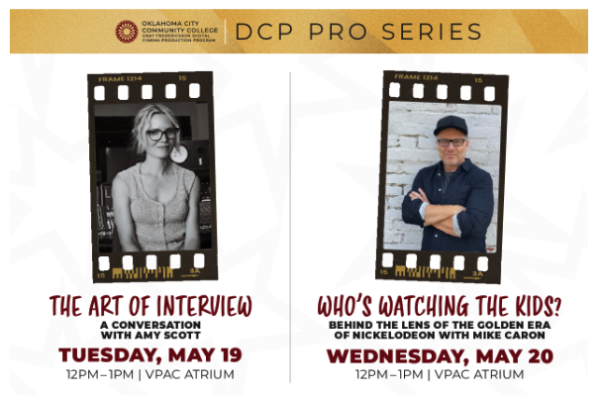
Caron and Payne held the second discussion the following day and primarily focused on the importance of actors in the filmmaking process, which Caron said he began to recognize while working with Nickelodeon during its golden age.
Caron started off as an actor in various plays and TV shows but eventually moved into producer and director roles. He mentioned that those roles were easier for him to execute because of his early experience as an actor, which allowed him to develop the language needed to communicate with and direct actors.
Caron said that it is essential to listen to actors when working on a project because they are the ones who bring a show to life and can add vital perspectives. Additionally, he stated that it is important to make sure that actors feel protected, comfortable and safe in order to get the shots needed from them.
Toward the end of the discussion, Caron and Payne opened the floor to questions from attendees. One attendee asked what they believed the ‘it’ factor was, and the two speakers had different answers.
Caron explained the factor that distinguishes who is going to be successful and who is not by saying, “The most successful people in Hollywood are the most collaborative people in Hollywood.”
He emphasized the importance of being open to ideas and being unselfish when it comes to the story being told. On the other hand, Payne described the ‘it’ factor as curiosity.
“The really talented people that I have met in this world, in every category that I’ve met them, are people who are genuinely interested in the people they are talking to,” Payne said. “They’re interested in the subjects. They’re interested in learning. They’re interested in getting better. And that is something you pick up on immediately.”
The speakers left the audience with the sentiment that success in the film industry is not linear. It took Caron 12 years to direct, and Scott sold her first film at the age of 40. Payne said that working toward success in the film industry is a long journey, but there will always be a defining event that catapults a career.