



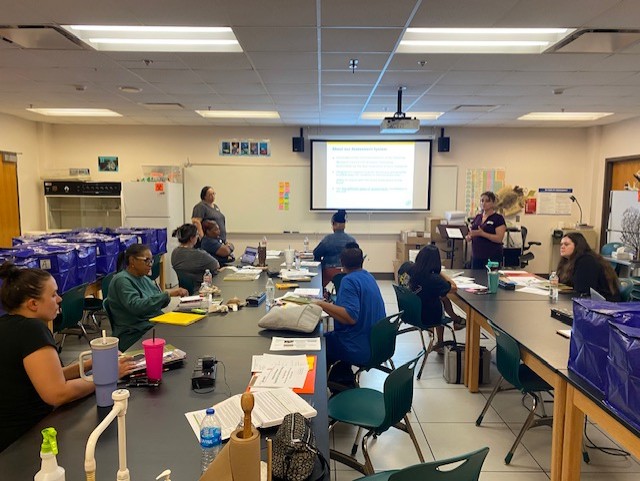
















OCCC is bringing back an important training workshop for faculty and staff aimed at better supporting students who are struggling. The workshop focuses on “motivational interviewing,” a communication approach that encourages students to take ownership of their goals and decisions.
According to Professor of Psychology Gregory Parks, motivational interviewing is “a particular way of talking with people about change and growth to strengthen their own motivation and commitment.”
Rather than telling students what to do, this approach focuses on guiding them to discover solutions for themselves.
Parks explained that the method is conversational and student-centered.
“It’s really kind of a conversation … exploring the student’s strengths, their goals and ultimately working toward a plan,” he said.

Instead of giving direct instructions, faculty members help students reflect on their own experiences and identify what strategies work best for them.
One of the key ideas behind motivational interviewing is that students are the experts on their own lives.
“They know the things they’ve tried before that have worked and have not worked,” Parks noted.
Because of this, students are more likely to follow through on plans they create themselves rather than ones imposed on them.
The effectiveness of motivational interviewing is supported by extensive research. Parks noted that “there have been thousands of research studies that have shown it to be effective.”
Originally developed in psychology, the approach is now widely used in healthcare, criminal justice and increasingly in education.
In academic settings, motivational interviewing can be especially helpful for at-risk students. Many students face challenges such as time management, missed deadlines or balancing school with personal responsibilities.
“Students are taking on too much,” Parks said. “They may miss deadlines, not get work turned in or miss a lot of class.”
Through guided conversations, faculty can help students connect their daily choices to their long-term goals. For example, a student working toward a degree to support their family may better understand how improving study habits can help them succeed.
“We’re trying to help them see what’s going to be to their benefit … to help them achieve their goals,” Parks explained.
Another benefit of this approach is that it reduces pressure. Traditional advising can sometimes feel like lecturing, which may discourage students from seeking help. Motivational interviewing, on the other hand, is collaborative.
“We are respecting their autonomy and their choice to make these decisions themselves,” Parks said.
The recent workshop at OCCC was designed to be interactive and hands-on. Participants didn’t just listen to lectures but practiced real-life conversations.
“It’s a very experiential training,” Parks said. “They’re actually getting real-life practice.”
OCCC plans to offer similar workshops in the future, embracing motivational interviewing as a valuable tool that can help students not by telling them what to do, but by empowering them to take control of their own paths.