



















As Oklahoma City’s Spanish-speaking population continues to grow, healthcare professionals increasingly need the skills to communicate effectively with patients from diverse backgrounds. OCCC’s Spanish for Health Professions course was created to help meet that need by preparing students with practical language skills they can use in clinical settings.
According to Hilde Votaw, professor of modern languages and modern language coordinator in the OCCC Division of Arts, English and Humanities, the course was introduced to address a growing demand within the community.
“Spanish for Health Professions is a course that was first offered eight years ago due to the demand from Spanish-speaking patients in the Oklahoma City metro area,” Votaw said. “OCCC has very strong health profession programs, such as nursing, and they have a need for students to be able to facilitate communication between a Spanish-speaking patient and the healthcare provider.”
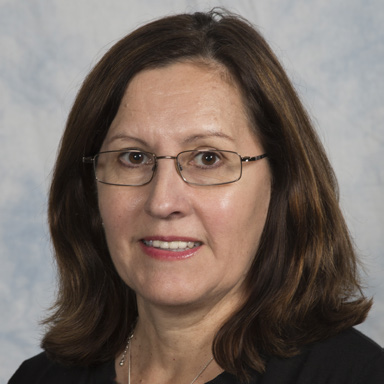
Modern Language Coordinator
Professor of Modern Languages
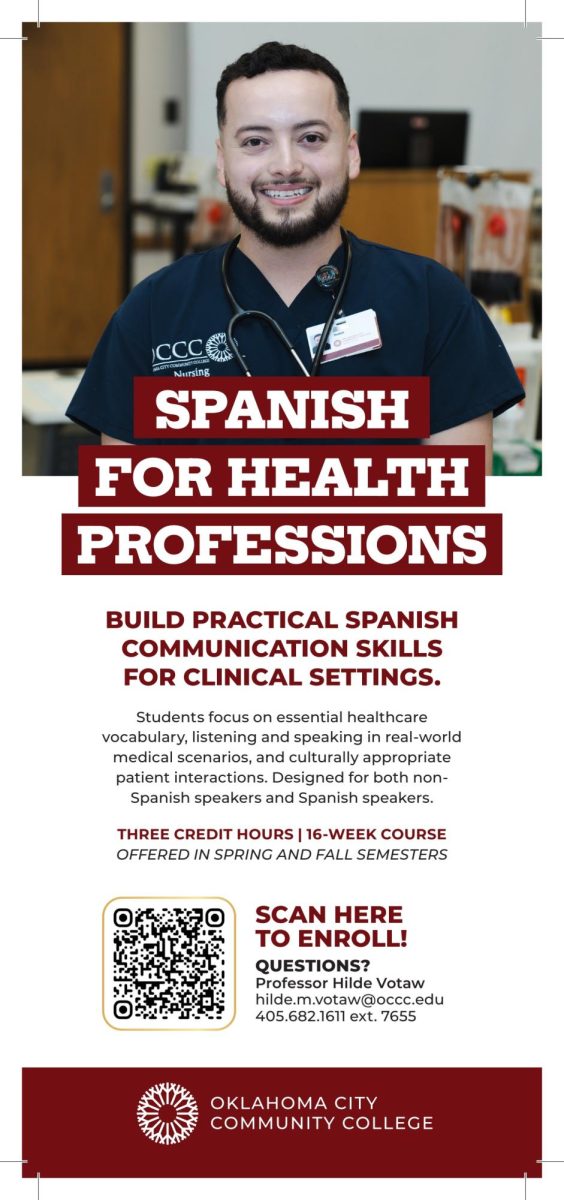
Unlike traditional Spanish classes that focus on grammar and everyday conversation, Spanish for Health Professions is designed specifically for students entering healthcare fields. The three-credit-hour course, offered during the fall and spring semesters, emphasizes healthcare vocabulary, listening and speaking skills in real-world medical situations, and culturally appropriate patient interactions. It is designed for both non-Spanish speakers and heritage or native Spanish speakers.
Votaw said the course aligns with OCCC’s mission of preparing students for successful careers by giving them practical experience before they enter the workforce.
“It supports them by providing the tools,” Votaw said. “OCCC wants the students to gain practical experience and also be ready when they hit the job market.”
She explained that students who complete the course become more competitive candidates for healthcare positions because they develop communication skills that employers value.
“This course helps the students be more marketable whenever they go into looking for jobs,” Votaw said. “They have the tools, some linguistic capabilities, to facilitate communication between a healthcare provider and a patient.”
Although students gain valuable Spanish communication skills, Votaw emphasized that the course is not intended to train professional interpreters.
“This is not a translation course,” she said. “But it supports communication” between healthcare providers and Spanish-speaking patients.
According to OCCC’s program information, students practice spoken Spanish for clinical settings, including patient intake, giving instructions and communicating during follow-up care. The course also focuses on building stronger patient-provider relationships while helping students gain confidence when interacting with Spanish-speaking patients.
In addition to strengthening communication skills, the course provides career benefits. Students gain a real-world advantage during clinical rotations and earn a micro-credential that can be highlighted on school applications or résumés, demonstrating specialized training in healthcare communication.
As healthcare providers continue serving increasingly diverse communities, communication has become an essential part of quality patient care. By combining practical Spanish language instruction with healthcare-specific terminology and cultural awareness, OCCC’s Spanish for Health Professions course helps students develop skills that can improve patient experiences while preparing them for successful careers in healthcare.
For students pursuing nursing, allied health and other medical professions, the course offers more than language instruction. It provides practical tools that can improve patient interactions, strengthen employment opportunities and help future healthcare professionals better serve Oklahoma City’s diverse communities.