



























All over the world, people battle water cycles to maintain infrastructure.
One of the biggest threats to property is moving water and its byproducts. Mold, corroding steel, erosion and rotting wood are only a few examples of the many issues that arise when too much moisture collects in an area.
Many opt for what appears to be the easiest method of dispersing the universal solvent, such as large drainage funnels. However, studying native biomes has shown there may be a better approach to handling excess moisture.
OCCC began construction in the early months of 1972, with the first completed section being the lower half of the Science, Engineering and Mathematics Building. Since the college’s inception, there have been forward-facing designs to expand the storm drainage network that stretches across campus today.
This drainage system is most often seen as concrete ditches following the curvature of grassy hills and parking lots. However, the network also runs through nearby neighborhoods and underneath the school.
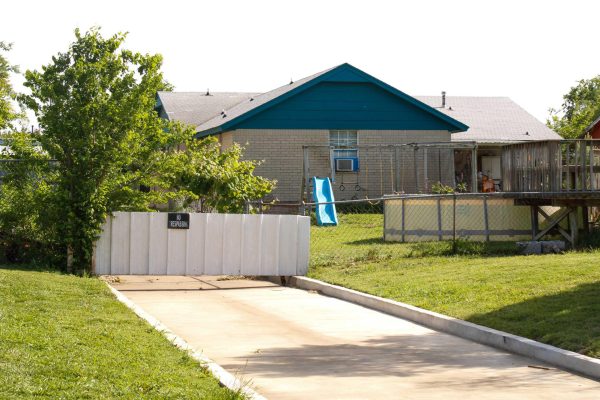
The necessity of this system cannot be understated, as the land OCCC was built upon was once a wetland before human settlement reshaped the area.
Wetlands are a crucial part of Oklahoma’s wildlife, helping nourish the dry lands to the west and maintain water quality in the east. Professor of Biology Sherri Arthur helped the Environmental Protection Agency identify wetlands after completing graduate school and understands the importance they serve to the local ecosystem.
“Most wetlands serve as a ‘filtering system,'” Arthur explained. “They are areas of high vegetation with detailed root systems.
“As water (such as storm runoff) drains into the wetlands, the plants slow water flow down, allowing particulates to settle. Water is taken up by the roots, and most toxins are absorbed into the plant tissue.
“These ecosystems are fantastic for preventing sudden floods, filtering water and also providing breeding grounds for many different species.”
The college was built on wetlands that tempered the raging waters of the North Canadian River for millennia. This poses a challenge to the structural integrity of the campus due to the high precipitation and water flow that move through the area.
At the same time, the placement of the college over this section of land has significantly reduced wetland territory and its ability to calm waters during rainy seasons.
Director of Projects, Design and System Manager Kevin Brannan shared how the campus is affected by these downpours.
“The system is capable of handling most rains with minimal water intrusion into the buildings,” Brannan said. “However, we usually encounter a few storms each year in which the large volume of water deposited in a short amount of time can exceed the system’s capacity. When this occurs, Facilities Management and our custodial contractors move to address the areas of intrusion as quickly as possible to minimize the potential for damage and impact on the college’s operations.”
As it currently stands, the OCCC drainage system does not function as an effective artificial wetland. Water rushes quickly through man-made ditches, allowing for very little filtering of toxins and nutrients that could otherwise support local flora.
A system that emphasizes native plants to slow and filter rushing water could reduce the intensity of storm runoff affecting infrastructure while also feeding back into the natural cycles that make the central Oklahoman biome unique.