






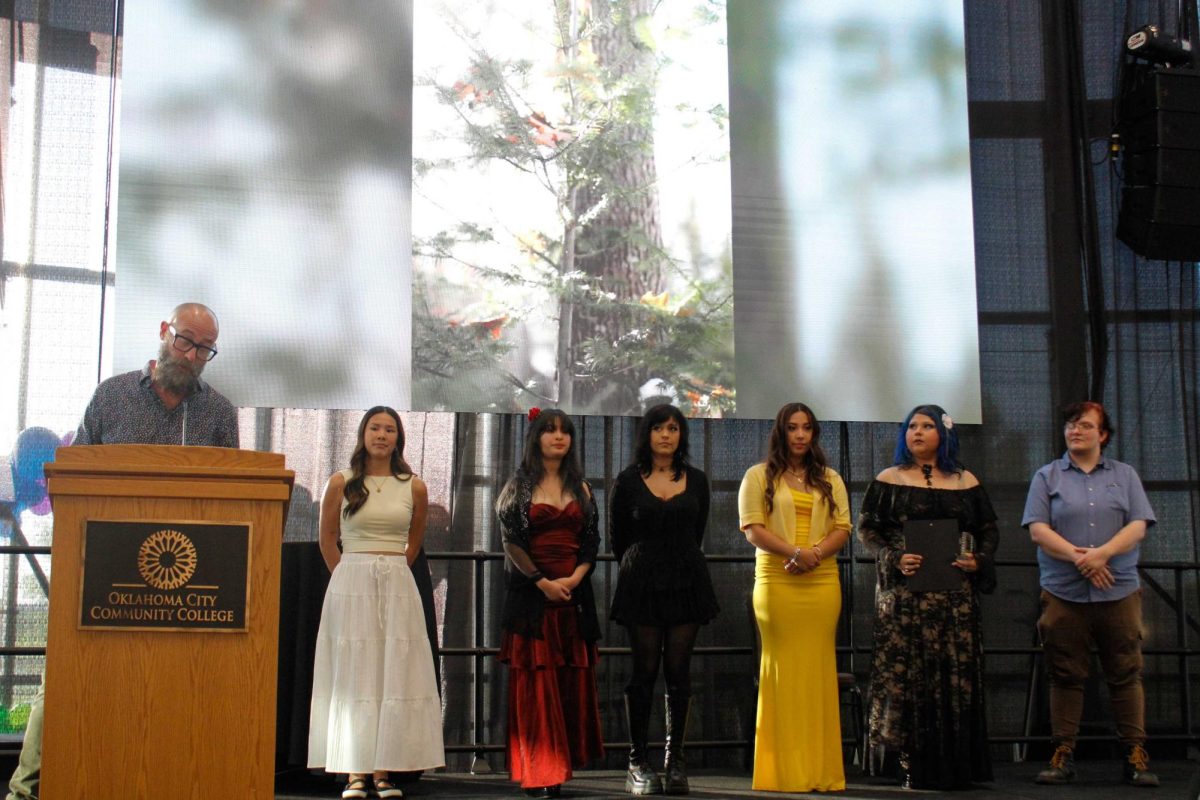










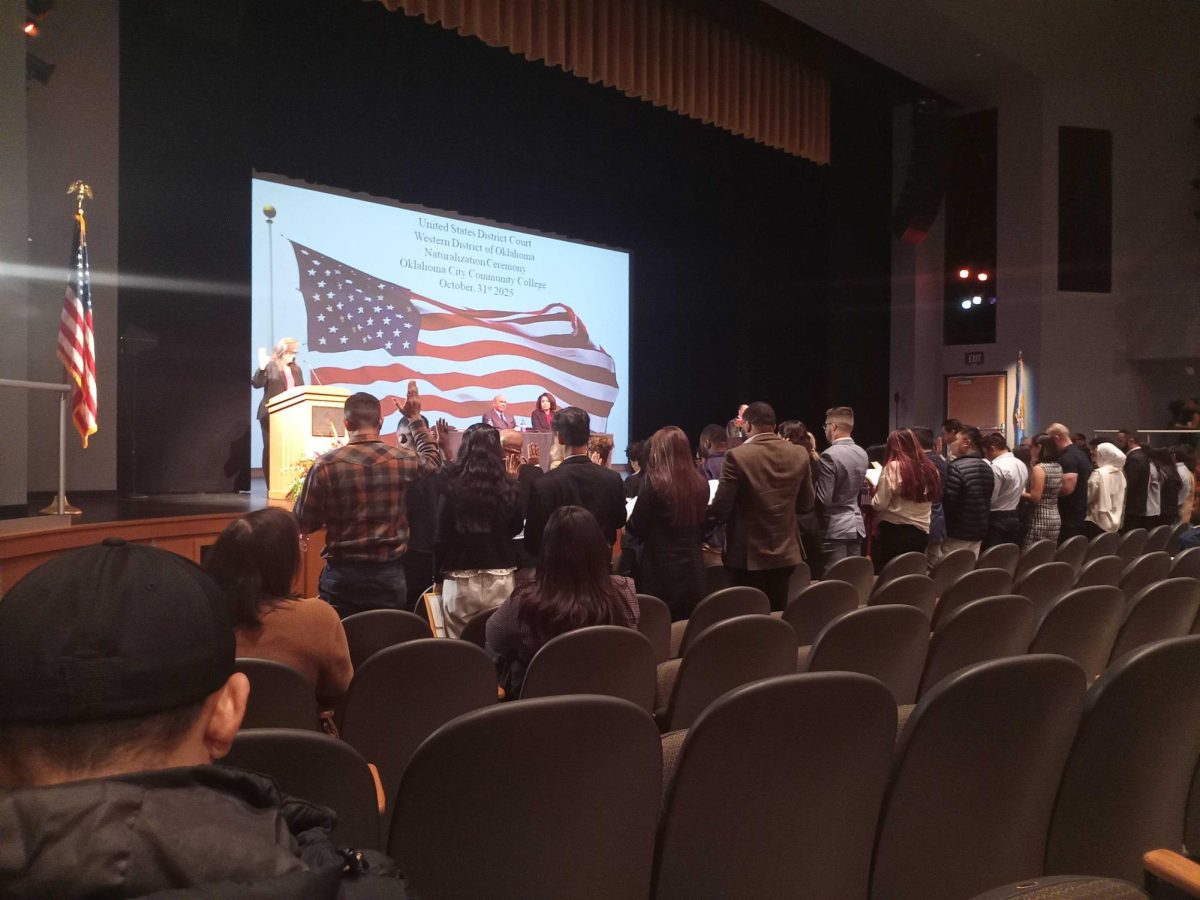
OCCC’s Visual and Performing Arts Center recently hosted an official naturalization ceremony, where dozens of new citizens representing 23 countries took the oath of allegiance to the United States.
The ceremony was presided over by Bernard Jones, U.S. district judge for the Western District of Oklahoma and husband of OCCC President Mautra Jones. The event drew students, faculty, community members and the families of those getting naturalized, with the crowd gathering to witness one of the most significant milestones in an immigrant’s journey – the moment when they officially become Americans.
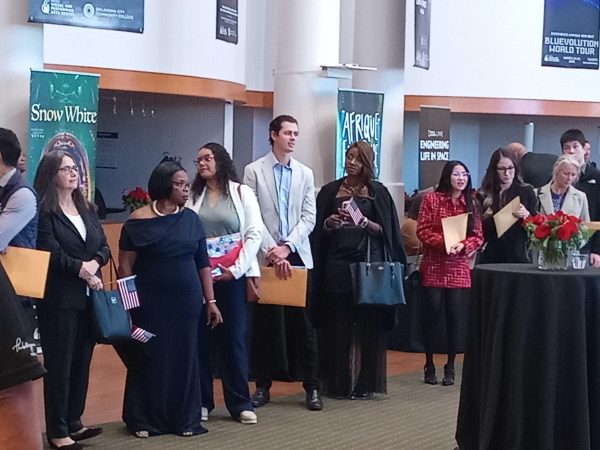
Also present were members of the Daughters of the American Revolution, a non-profit, service-based organization that dedicates itself to the preservation of history, education and patriotism. Members of the organization, who regularly attend naturalization ceremonies, could be seen passing out flags and leaflets while congratulating those who were about to become official U.S. citizens.
The ceremony’s guest speaker, Fred Mendoza, founder and chairman of the Oklahoma Hispanic Institute, delivered a heartfelt address that reflected on the immigrant experience and the unity found in diversity. Mendoza, shedding tears of pride, shared memories of watching his own parents become U.S. citizens after fleeing Mexico during the revolution and settling in Kansas. He concluded his speech with a powerful message focused on strength and unity.
“We are not a country of victims,” Mendoza declared. “We are a country of victorious people who come together and make one culture.”
Rosaura Teus, an OCCC alumna who graduated in 2021 and now serves as a coordinator for Students Connecting with Mentors for Success, later shared her own memories of witnessing a previous naturalization ceremony at the federal courthouse.
“It was a great experience,” Teus said. “SCMS took a trip to the federal courthouse to watch a naturalization ceremony, and we got to see one of our own students get naturalized. It was a very emotional experience.”
For Teus, naturalization ceremonies represent far more than a legal process – they symbolize unity and shared identity.
“It’s like getting to extend my family,” she said. “I’m proud of my Mexican heritage, but I’m also proud about being an American. I come from Mexican roots, but I was born here in America, and I was raised here. Being American is being part of a mixture of cultures – and being able to add another person to that, I think, is amazing.”
Her words capture the essence of what the ceremony represents to so many: that becoming an American is not about replacing one culture with another, but about weaving together stories, traditions and dreams to form something greater.
The ceremony served as a reminder that America’s story continues to grow with every new citizen who takes the oath.