



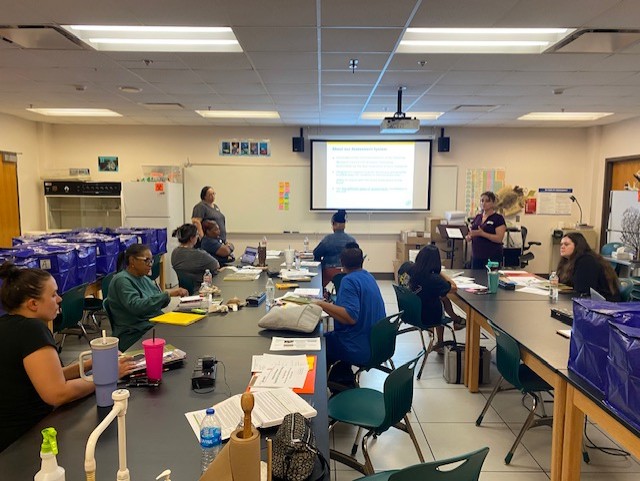















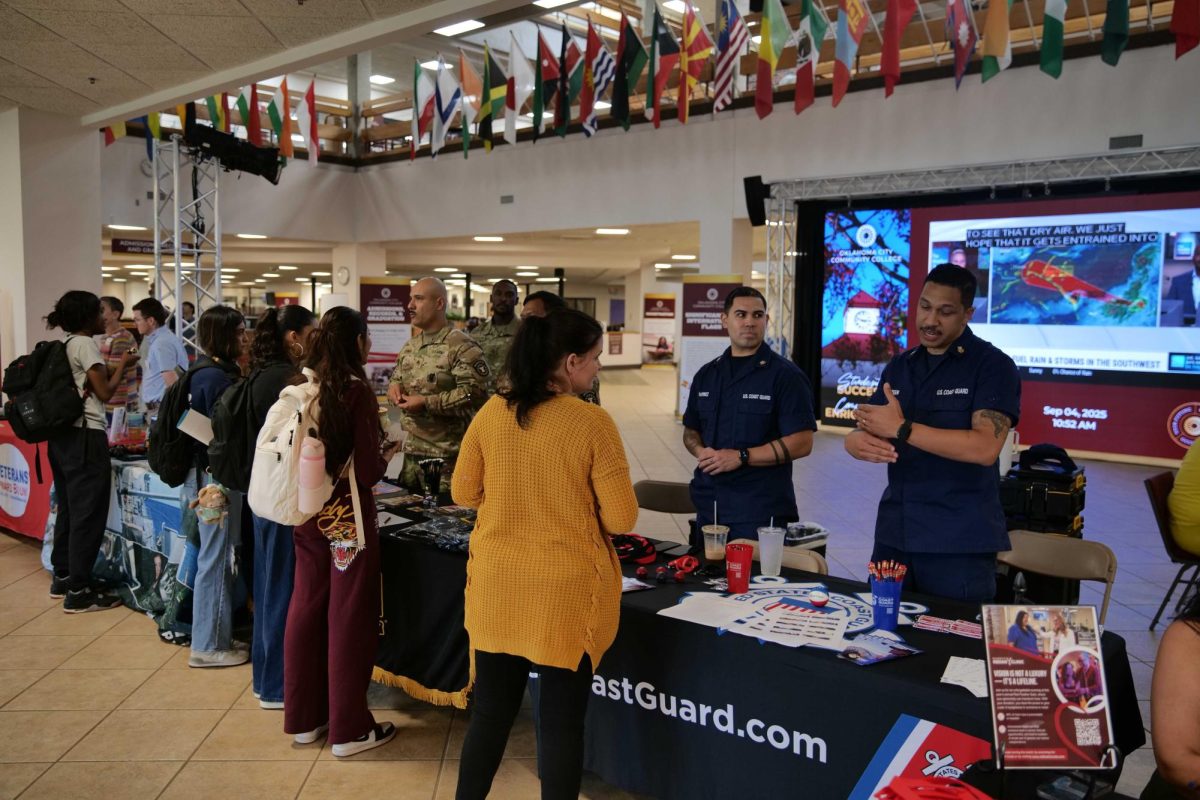
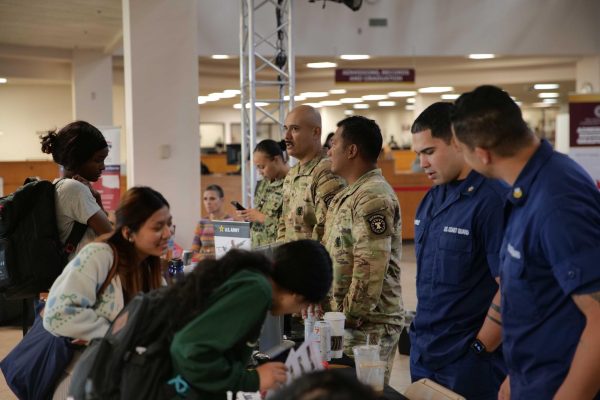
OCCC hosted its first veterans resource fair this month, drawing hundreds of attendees and nearly 40 community organizations to campus.
The event was designed to connect veterans and other community members with organizations that provide support outside the traditional focus on employment. Karl Greene, outreach specialist at the Center of Excellence for Veteran Student Success, organized the fair with the specific goal of keeping the focus squarely on resources.
“This was brand new to OCCC,” Greene said. And “everything about this fair was strictly about resources.”
Greene said he worked with longtime partners to bring in organizations he trusted to provide support. Some of those groups included Veterans Affairs, the Department of Justice, the Oklahoma Department of Rehabilitation Services, Urban League of Greater Oklahoma City and representatives from the Cheyenne and Arapaho tribes. In total, 38 vendors signed up, and all 40 vendor tables were filled.
“It was a lot of people that came through that day,” Greene said. “We probably ended up seeing about 500 people or more.”
Although the event was centered on veterans, Greene emphasized that the fair was designed to benefit anyone in need. Organizations on site provided information on housing, health, education, suicide prevention and domestic violence support services. The YWCA and groups focused on substance abuse recovery were among the participants.
“Some of them were strictly for veterans, like Veterans Affairs,” Greene said. “But we also had people like DRS, OIC (Opportunities Industrialization Center), Urban League, even some of the native groups. We know those are populations of people who are in the civilian world now who might need help.”
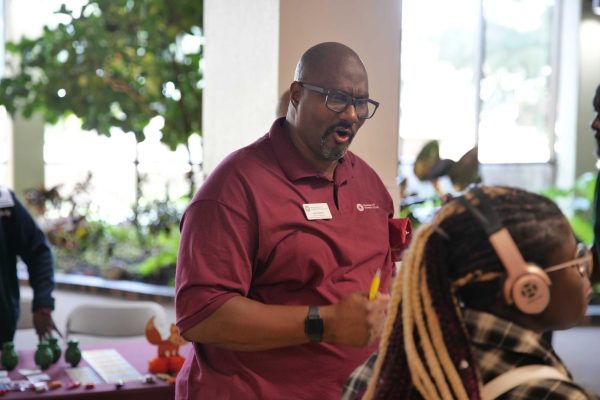
Greene said a key part of the planning was ensuring that no vendors were allowed to sell products or services. Unlike a job fair, which can include recruiters looking to hire, the resource fair was meant to connect people with no-cost support.
“I didn’t allow one of the credit unions to come because their credit union, in essence, is really not trying to give you anything,” Greene said. “We wanted nobody to be able to sell anything.”
Vendors, he added, were chosen because of their ability to provide immediate and practical assistance. One example was Supportive Services for Veterans Families, which helps veterans first secure housing before addressing employment, food and benefits.
The turnout, Greene said, encouraged many vendors to express interest in returning for future events.
The resource fair was the first of its kind at OCCC, but Greene said it is part of a growing slate of activities for veterans and the broader community. OCCC will partner with the University of Oklahoma in November for a combined job and resource fair. The college will also host a “Lunch and Learn” on Oct. 8 and a veterans luncheon on Nov. 12 at the OCCC Visual and Performing Arts Center.
Greene said he views these events as opportunities not only to connect veterans to resources but also to encourage students to make use of what is available to them.
“There are so many opportunities out there now that weren’t there for me when I was in school,” Greene said. “The young people today have a great opportunity if they would take advantage of it.”
He pointed to resources such as OCCC’s food pantry and scholarships as examples of support that often go underused.
“That’s money in your pocket if you don’t have to spend money on those things,” Greene said. “If you add that up over a year, that’s a lot of money.”
Greene added that too many students pass by resource fairs without stopping to learn what is being offered.
“They’ll say, ‘I have to go home,’” he explained. “But what they’re missing is that just-in-case contact. It’s not that you need it right now, but it’s something you can have in the hole so you can use it later.”
Greene, who served in the military before working as a chef for more than 40 years, said his own path to higher education began at age 59. He said the resources available today can make a significant difference for both veterans and non-veterans alike.
“You never know what you might need in a year, six months, a week,” he emphasized. “And if you already have that information, it makes it easier when you do.”
For Greene, that database of contacts is what makes the resource fair so valuable.
“That’s what people are missing,” he said. “They’re missing that just-in-case contact. In life, there’s always going to be something we need, and if you have some semblance of where to find it, it makes it easy when you need it.”