















At OCCC, a growing number of faculty members are rethinking how students access course materials while saving them millions of dollars in the process.
Through the use of Open Educational Resources, professors across multiple disciplines are replacing expensive textbooks with free, high-quality alternatives, making education more accessible and inclusive.
For many students, textbook costs can be overwhelming. OER removes that barrier completely, allowing students to begin their courses prepared from day one.
“Students can read and navigate through the book on their smart phone or computer,” OCCC Chair of History/Geography Leslie Jones explains in the online OER faculty guide published by the OCCC library. “Since it is available online, students have access to the book the first day without problems or a need to wait on their financial aid.”
This immediate access has become one of the biggest advantages of OER at OCCC.
Faculty members are also using OER to create more engaging and adaptable learning experiences. Professor of Chemistry Mayank Puri highlights both the academic and financial benefits in his Chemistry for Engineers course.
“One way to help make chemistry as accessible to as many people as possible is to minimize financial barriers, ultimately with the hope of making chemistry more accessible and helping our students understand the universe a little bit more,” Puri states in the library’s OER faculty guide.
By using a free OpenStax textbook, Puri ensures that every student can fully participate in the course.
In business courses, Professor of Accounting Kamille Soutee emphasizes flexibility and inclusivity.
“By utilizing OER textbooks and custom materials I’ve created, I provide a cost-effective and dynamic curriculum,” she notes in the same OER faculty guide. “This approach ensures that all students, regardless of their financial background, have access to high-quality, up-to-date learning materials.”
Soutee’s use of OER in Advanced Excel reflects how digital resources can keep courses current while eliminating costs.
Engineering students are seeing similar benefits. Chair of Computer-Aided Technology John Helton describes how switching to OER transformed his course.
“This presented the perfect opportunity to replace our $100 textbook with an Open Educational Resource alternative,” he emphasizes in the OER material compiled by the campus library.
The free textbook “Mastering Autodesk Fusion” now gives students hands-on experience with 3D modeling while saving them money.
Mathematics courses are also moving toward fully OER-based instruction. Professor of Mathematics Beth Rawlins has expressed clear enthusiasm for the transition.
“I am transitioning to using only OER textbooks and OER online homework platforms,” she states in the library’s OER faculty guide. “I’m excited to use OpenStax textbooks and the online platform MyOpenMath to provide no-cost materials for our students.”
This shift ensures equal access and removes delays caused by purchasing textbooks.
In the humanities, OER is enhancing both engagement and creativity. Professor of English Greg Daubenspeck has noticed how well students respond to interactive content.
“The students love the OER resources included in the course,” he says in the library’s OER faculty guide.
Daubenspeck’s use of a multimedia-rich textbook with embedded videos helps students better understand film techniques and analysis.
Other faculty members are taking innovative approaches to OER as well. Chair of English Jeff Provine explains how he created a customized resource for his course.
“I built a textbook combining film analysis from one source and literature analysis from another,” he says in the OER faculty guide published by the library.
This flexibility allows instructors to adapt materials based on student feedback and course needs.
Similarly, former Chair of English Jacob Nelson notes in the same OER faculty guide: “The students tend to enjoy the digital textbook, and the fact that it’s free seems to get things off on the right foot.”
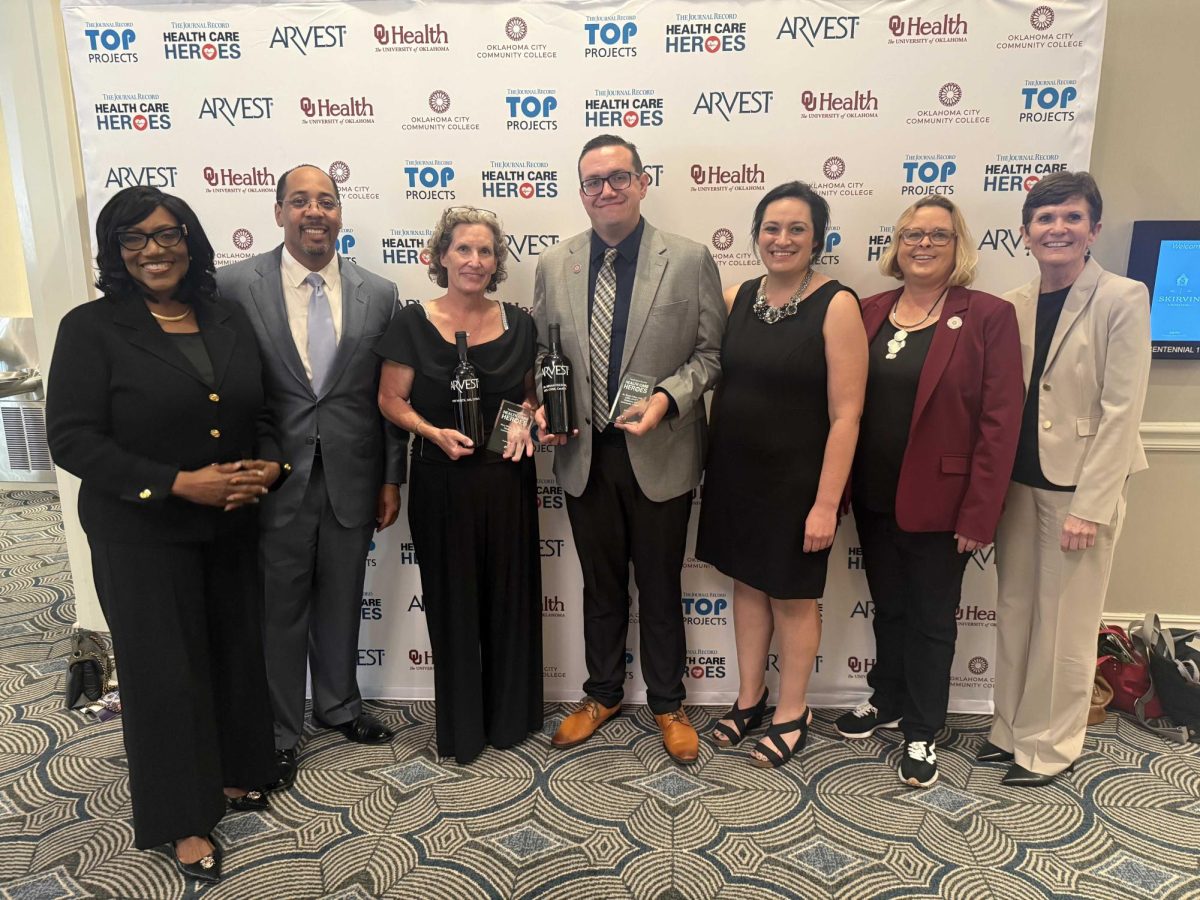
OCCC’s efforts have not gone unnoticed. Several faculty members – including Daubenspeck, Puri, Coordinator of Diversified Studies and Pre-Education Jon Inglett, and Nursing Student Success Specialists Tonya Faires and Ericka Williams – recently received OER Development Grants from the Oklahoma State Regents for Higher Education, recognizing their leadership in expanding these resources.
As OER continues to grow at OCCC, one thing is clear: This movement is not only about saving money but also about creating opportunity.
“Thankfully,” Rawlins declares in the OER faculty guide, “there are awesome resources out there.”
For OCCC students, those resources are opening doors to a more affordable and accessible education.