




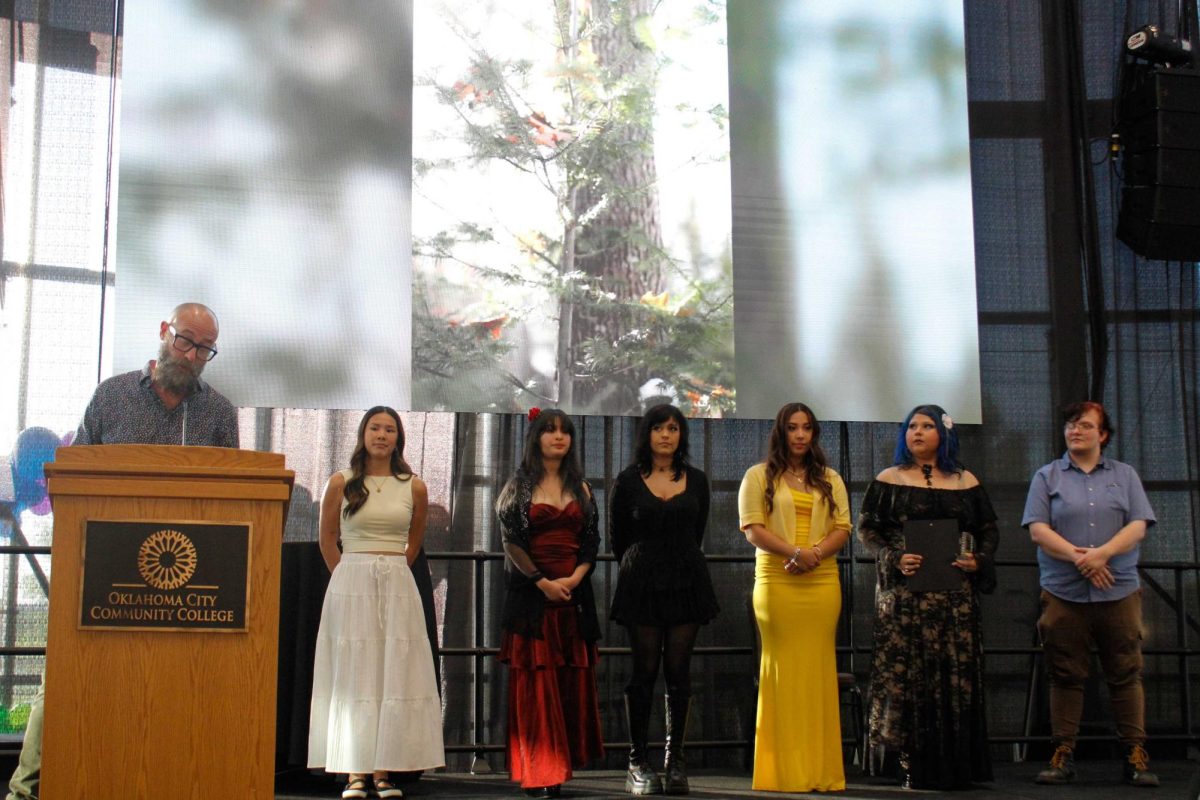








Six OCCC students and two faculty members have been selected to present their work at the National Conference on Undergraduate Research, the largest undergraduate research conference in the United States.
The conference will take place from April 13 to April 15 in Richmond, Va. The annual event brings together students from colleges and universities across the country to present their original research and creative work.
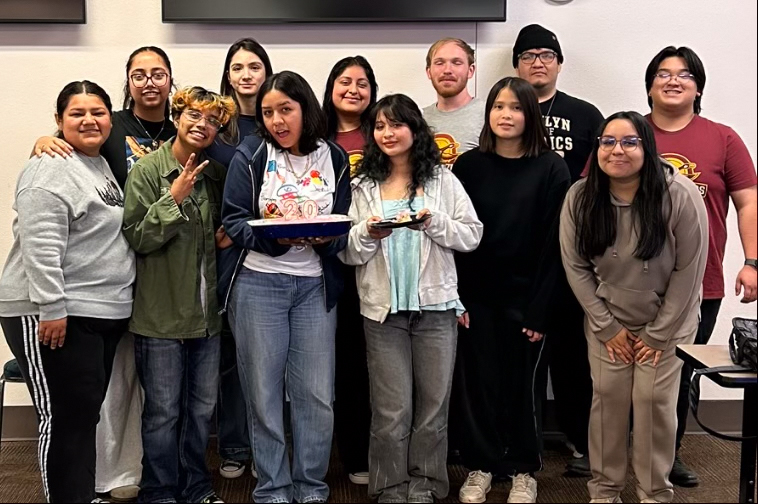
The OCCC students selected to present at NCUR include Bobie Johnson, Madison Upton, Elyas Anderson, Luke Sewell, Christina Basara and Ayla Yeakley. They will be accompanied by two faculty presenters, Professor of English Gena Ford and Dean of Science, Engineering and Mathematics Susmita Hazra.
Ford said student participation began when several students applied independently after being encouraged to submit their work.
“I let them know about it. I said, ‘If you want to apply, go ahead and apply,’” Ford said. “Dr. Hazra and I applied to present there, so we were going anyway.”
NCUR accepts submissions through an abstract review process, and presenters were notified of acceptance in mid-January. OCCC and donors are covering travel expenses, so students do not have to pay out of pocket.
According to Ford, the opportunity is significant not only because of the conference’s scale but also because of what it offers students beyond presenting their work.
“It’s a great opportunity to see what other students are doing all around the United States,” Ford said. “It’s also a great opportunity to network, to find people who are doing research that you’re interested in and to learn about four-year universities and potential scholarships.”
Ford emphasized that NCUR provides students with exposure to environments and opportunities that can help them grow their skills and networking opportunities.
“It’s great for presentation skills, but it’s so much more than that,” she said. “It’s also building up your research skills and the mentorship relationship.”
For Christina Basara, one of the student presenters, the decision to apply came almost on impulse.
“I applied 24 hours before the deadline,” Basara said. “I wanted the opportunity, and Professor (Jacob) Nelson was talking to me about it.”
Basara will present a spoken word poetry piece addressing the low graduation rates of individuals with bipolar disorder, a topic that is deeply personal to her.
“It’s something that affects adolescents severely in ways that make them not feel understood,” Basara said. “The way that we change the system and help other people is to bring more awareness to it.”
She hopes the conference will help her develop presentation skills while also allowing her to explore future academic opportunities.
“I want opportunities to learn how to present research and be inspired by other presenters,” she said. “This will also give me more opportunities to look into other schools around the nation after my time at OCCC.”
Elyas Anderson, another student presenter, said he initially hesitated before applying but was encouraged by family and faculty.
“They were like, ‘The worst that can happen is they don’t accept you,’” Anderson said. “So, I thought, it doesn’t hurt to try.”
Anderson will present a poem he previously shared at OCCC’s Scholars Day, focusing on his experience coming to terms with his gender identity. He said presenting at a national conference carries both personal and broader significance.
“I’m hoping to show that it’s possible for someone who’s trans to succeed,” Anderson said, “while also presenting something that’s trans for a national event.”
He said the experience is about more than personal achievement.
“I don’t want people to give up,” Anderson said. “I know what it feels like to feel like you have to give up on everything.”
Ford said moments like these are why undergraduate research and mentorship are so important to her.
“When a student realizes that their voice is important, that other people want to hear their voice, something changes inside them,” she said. “They start to see themselves as academics and believe they belong in higher education.”
Ford added that while the opportunity is transformative for students, it is equally meaningful for faculty.
“I’ve learned so much about mentorship and how to support students,” she said. “It’s changed me a lot.”