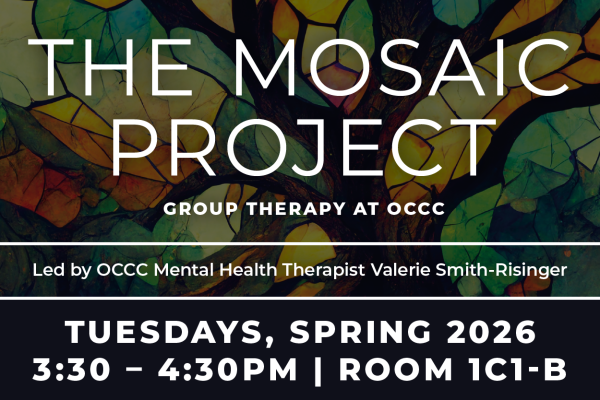
















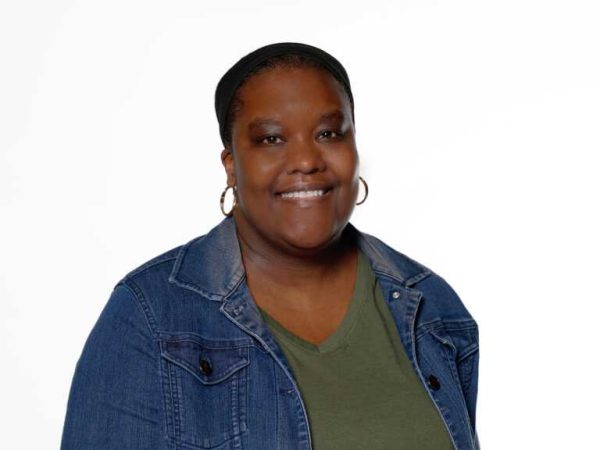
OCCC is offering students a new opportunity to focus on healing, connection and personal growth through a program called the Mosaic Project. Led by OCCC mental health therapist Valerie Smith-Risinger, this group therapy experience is designed to help students process trauma in a supportive and structured environment.
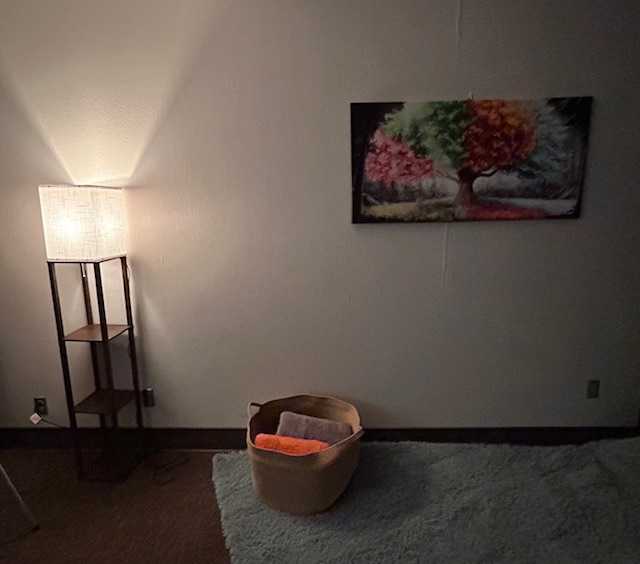
The Mosaic Project will take place this semester on Tuesdays from 3:30 p.m. to 4:30 p.m. in Room 1C1-B. The group sessions are free for OCCC students as part of the mental health services already included in their student fees.
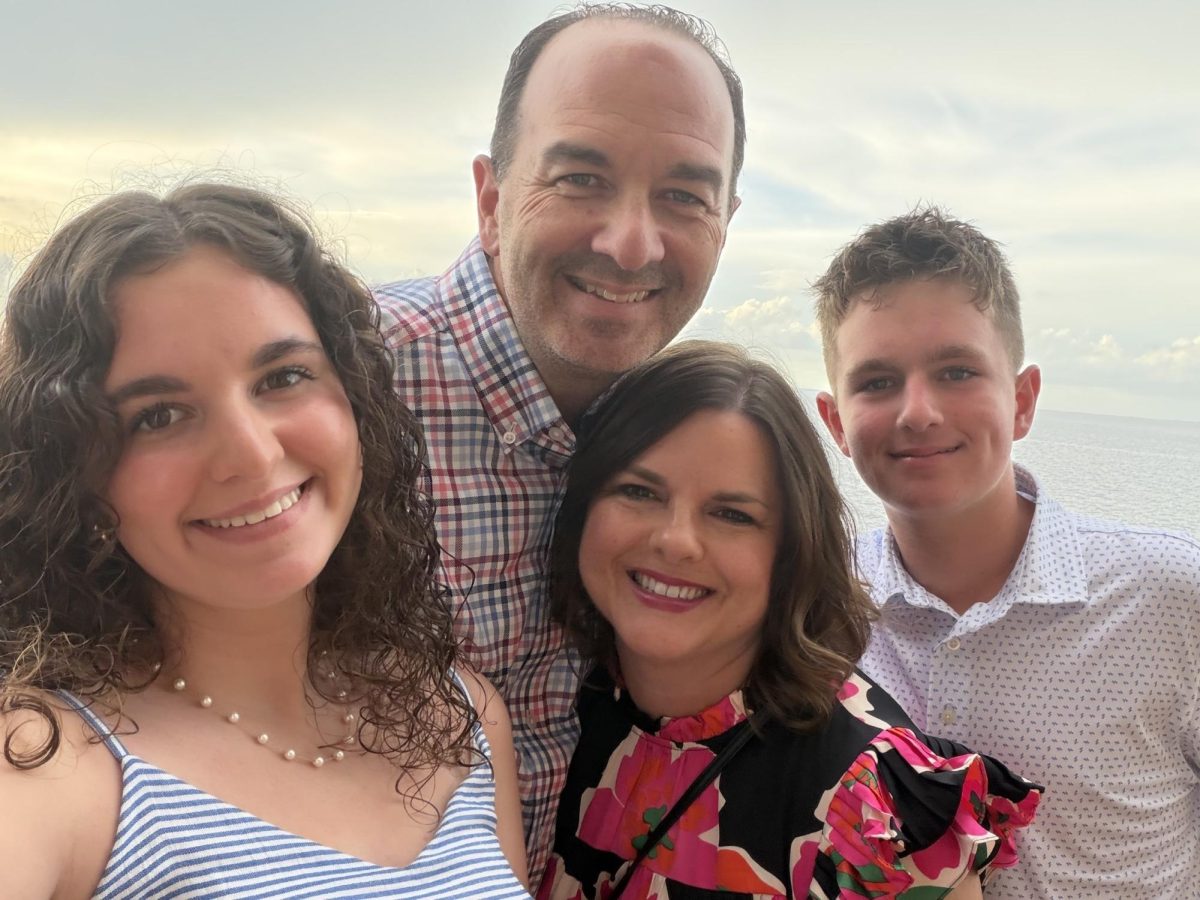
Smith-Risinger, a licensed professional counselor, specializes in trauma therapy. Her background includes working with individuals who have experienced post-traumatic stress disorder, abuse, neglect and other life-changing events. She explains that trauma does not always mean one dramatic event. It can also include long-term stress, cultural challenges, family struggles or experiences that have deeply affected someone’s sense of safety or identity.
The Mosaic Project is structured as a small, closed group. This means that once the group begins, no new members can join. The goal is to create a safe and consistent space with approximately four to seven participants.
Because trauma can be difficult to talk about, building trust is extremely important. In a closed group, students do not have to retell their stories repeatedly to new people. Instead, they can focus on gradual healing alongside the same peers each week.
The name “Mosaic Project” reflects the idea that each person’s life is made up of many pieces. Just like a mosaic artwork or stained-glass window, individual experiences – both painful and beautiful – come together to form a complete picture. Some pieces may feel broken or dark, but they still contribute to the whole design.
The group encourages students to recognize that their past experiences shape who they are, but those experiences do not have to control their future.
The program follows a trauma-informed approach based on principles from trauma-focused cognitive behavioral therapy (TF-CBT). While traditional TF-CBT programs often last 12 to 16 weeks, this group condenses important elements into a shorter format that fits the college schedule. Each weekly session includes structured activities designed to help participants process emotions in healthy ways.
Students may participate in journaling exercises with guided prompts that can help them know where to start. Creative activities such as drawing or symbolic exercises may also be used.
One example mentioned by Smith-Risinger is a “chair activity,” where a participant speaks to an empty chair to express thoughts or feelings connected to a person or event. These exercises allow students to explore trauma at their own pace in ways that feel manageable.
One of the main goals of the Mosaic Project is to reduce isolation. Many students carry emotional pain privately and believe they are the only ones struggling. In a group setting, participants often discover that others have faced similar challenges. This shared understanding can create unity and reduce feelings of shame or loneliness. Simply realizing “I am not alone” can be a powerful step toward healing.
Smith-Risinger also emphasizes that trauma does not disappear when ignored. If painful experiences are pushed down, they often resurface later, sometimes even stronger. By addressing trauma earlier, students can develop tools to manage triggers and emotional reactions in healthier ways.
Although the group may feel intense at times, it provides guidance and coping strategies to help students feel more in control of their emotions.
For students who feel unsure about joining a trauma-focused group, individual counseling sessions are also available at OCCC. Beginning with one-on-one therapy can help students feel more prepared before entering a group setting.
Overall, the Mosaic Project offers OCCC students a meaningful opportunity for reflection, connection and growth. By providing a safe space every Tuesday throughout the spring semester, this program encourages healing through shared stories and supportive community.