



















OCCC students and faculty played an active role in the recent Data Center Symposium 2026, hosted by the Hamm Institute for American Energy in Oklahoma City. The event brought together industry experts, researchers and students to discuss one of the fastest-growing global challenges: meeting rising digital demand while managing energy and water use sustainably.
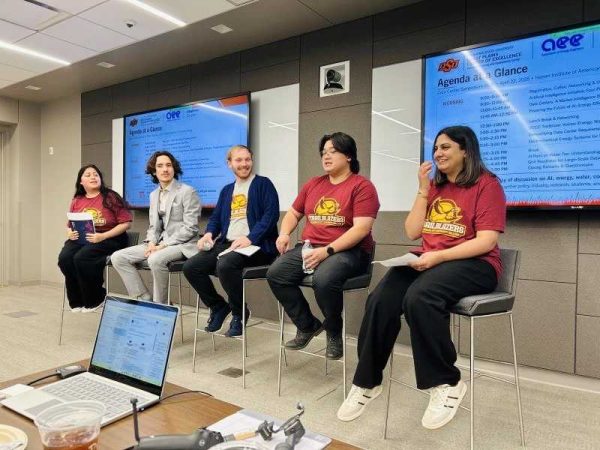
One of the symposium’s featured sessions was “OCCC Trailblazer Voices: Energy, Water, Sustainability and Stewardship,” a student-focused panel highlighting the next generation of engineers and problem solvers.
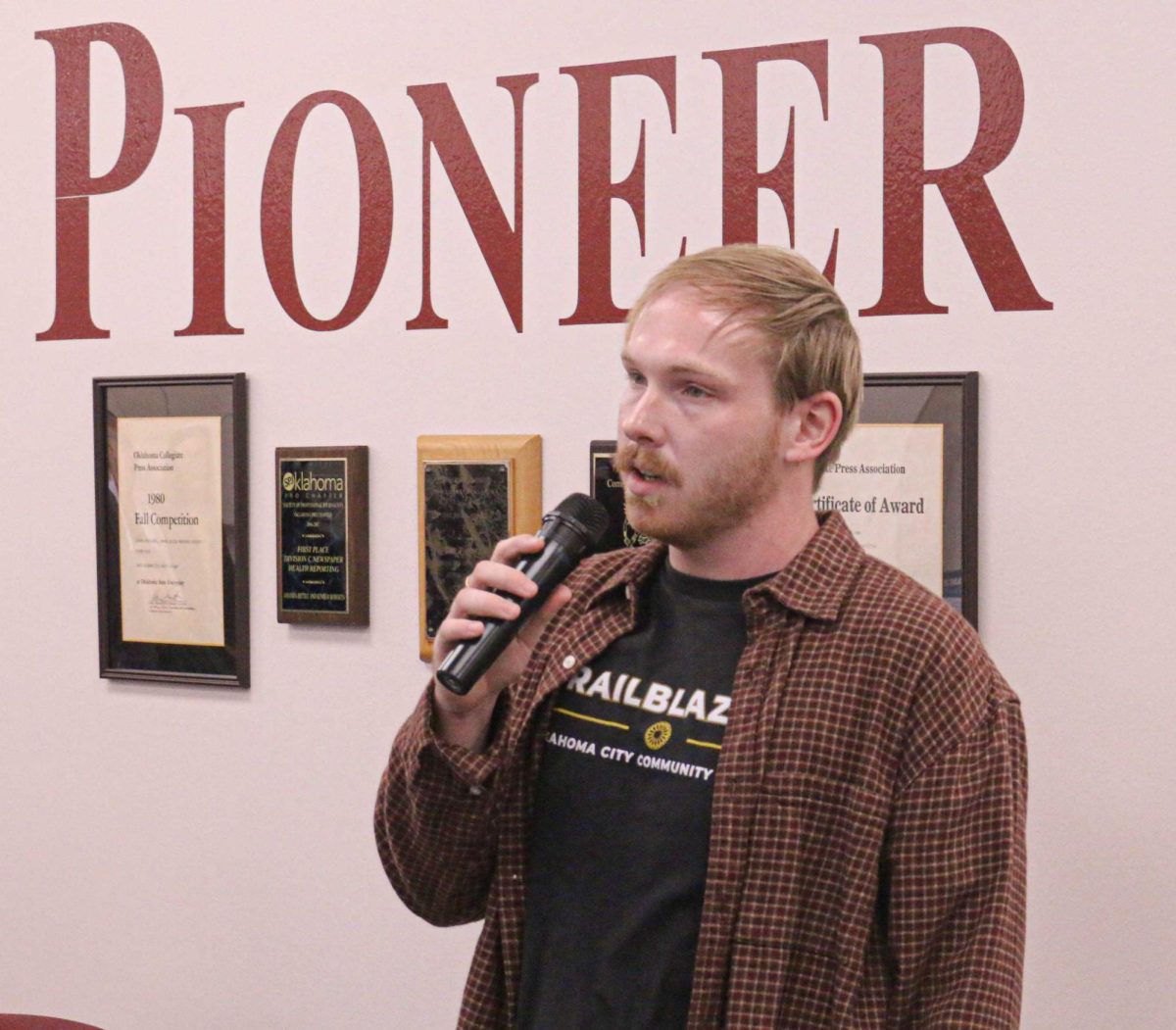
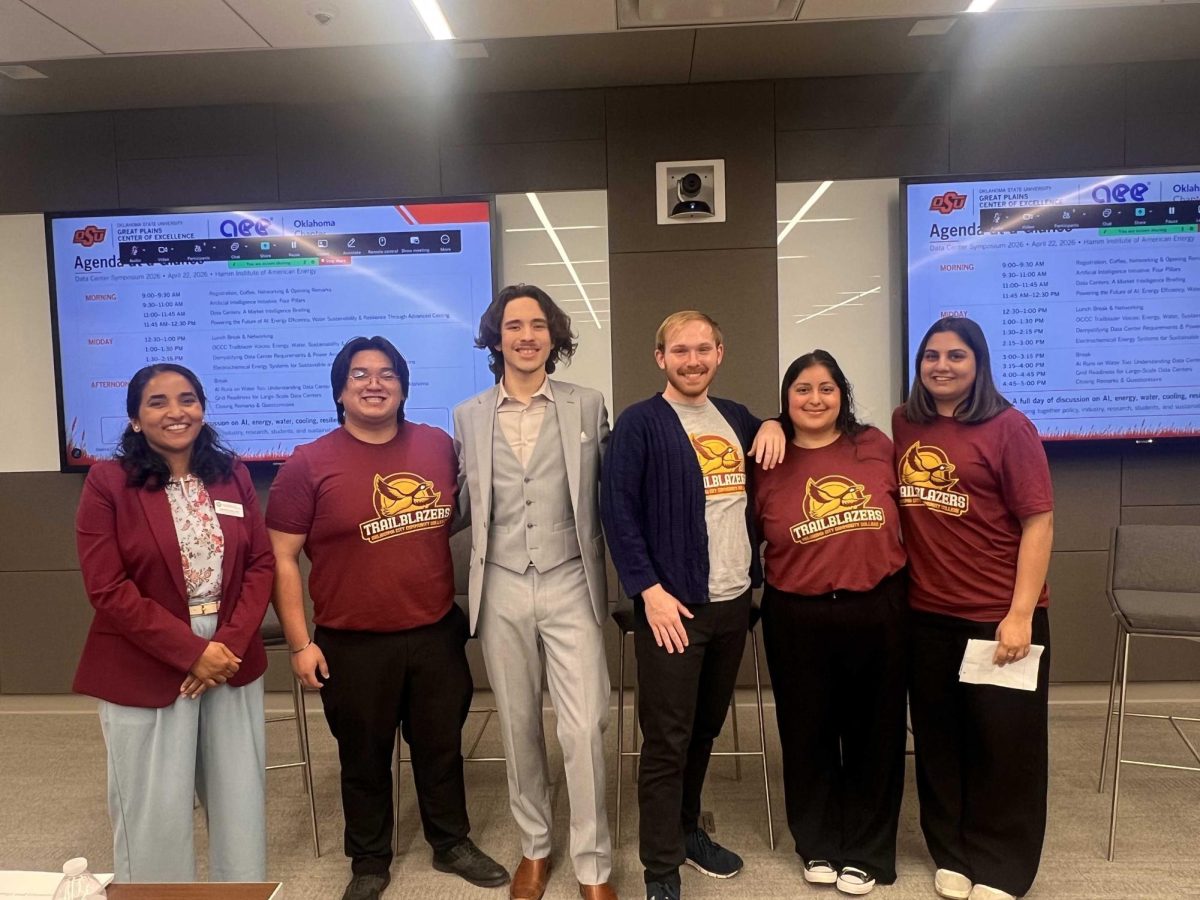
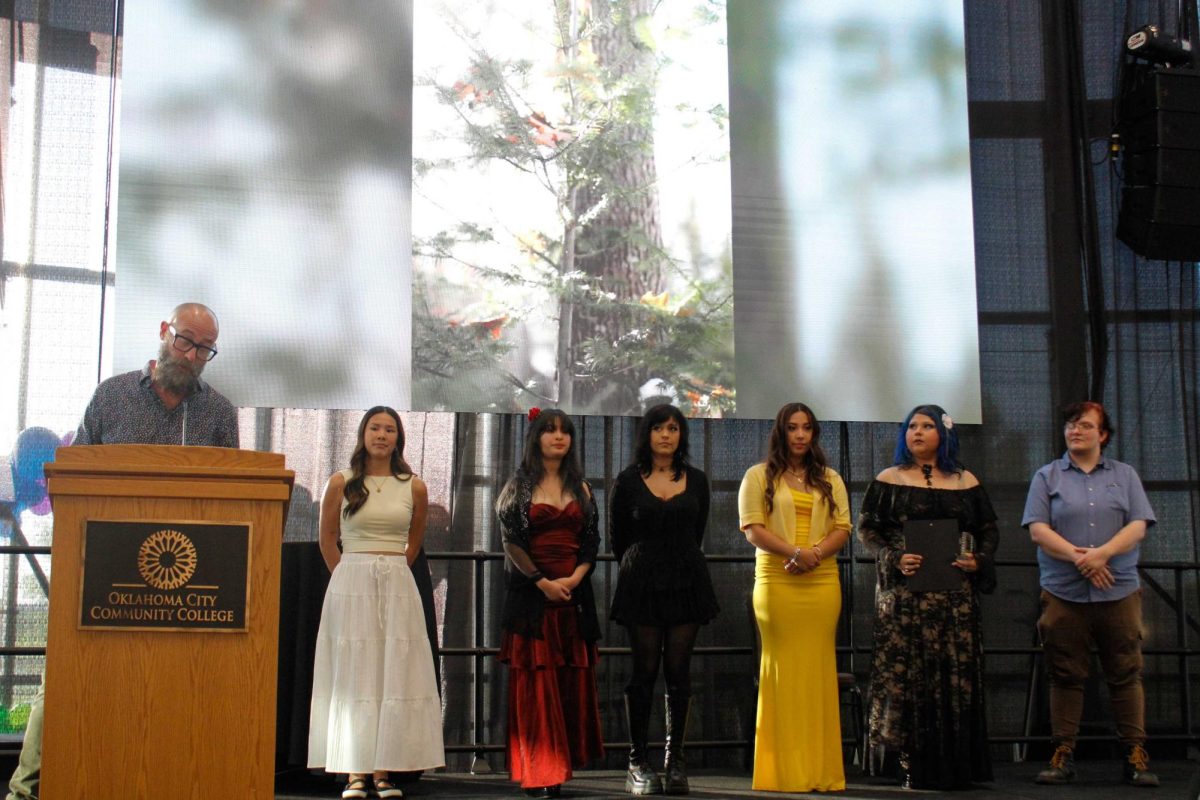
The panel featured four STEM students from OCCC: Trey Brite, Benedict Nguyen, Alonso Phillips and Masooma Rizvi. The discussion was moderated by Jurithsi “Juri” Rojo, an OCCC student and fellow participant who guided the conversation toward sustainability and real-world engineering challenges.
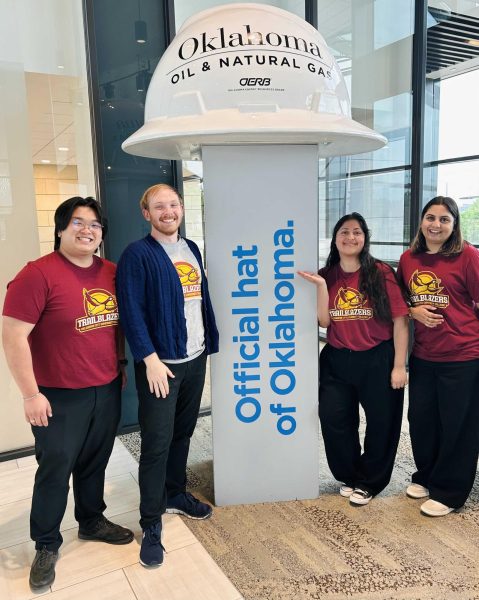
Against the backdrop of highly technical discussions throughout the symposium, the OCCC student panel brought a grounded and accessible perspective.
The students discussed how data centers power everyday life, from communication systems and healthcare technology to financial services and artificial intelligence tools. They reflected on how their engineering education connects directly to global challenges, emphasizing the importance of designing systems that balance technological growth with responsible resource use.
As moderator, Rojo helped connect these ideas to the broader mission of the Association of Energy Engineers (AEE), encouraging students to see themselves as active contributors to future energy solutions. The panel emphasized that students and early-career engineers bring fresh perspectives that are essential in addressing complex sustainability challenges.
At the conclusion of the session, the OCCC student panelists and moderator were recognized with goodie bags in appreciation of their contributions to the symposium.
The event was further strengthened through the participation of OCCC Dean of Science, Engineering and Mathematics Susmita Hazra. Collaboration among OCCC, Oklahoma State University’s Great Plains Center of Excellence (GPCOE) and industry partners highlighted a shared commitment to preparing students for careers in engineering and energy.
The symposium theme, “The Data Center Challenge: Energy Demand, Water Use and Sustainable Solutions,” set the stage for a series of expert presentations exploring how modern infrastructure is evolving to support artificial intelligence and cloud computing. Opening remarks were delivered by representatives from the Oklahoma chapter of AEE and the GPCOE, emphasizing the importance of innovation in energy systems and environmental stewardship.
Throughout the event, experts from academia, industry and government shared insights into the technical challenges facing data centers.
One of the key contributors was Dr. Hitesh D. Vora, director of the GPCOE and an endowed associate professor at the OSU School of Materials, Mechatronics and Manufacturing Engineering. Vora participated in discussions focused on energy systems and advanced engineering solutions for data center challenges.
A panel on artificial intelligence infrastructure included industry experts Katie Altshuler, Jason Angolano, Dalton Miller and Chris Schinnerer, who focused on policy and operational demands driven by AI expansion. Other presentations explored technical and environmental solutions.
Dr. Ardeshir Moftakhari and Dr. K. J. Jafarzadegan, both assistant professors at OSU, discussed advancements in cooling systems designed to improve efficiency in high-performance computing environments.
Dr. Pejman Kazempoor, an associate professor at the University of Oklahoma, highlighted electrochemical energy systems as a pathway toward more resilient energy infrastructure, while Christina Wang of SymbioPower addressed growing concerns about power availability for hyper-scale data centers.
This year’s symposium ultimately reinforced a central message: The future of digital infrastructure depends not only on technological advancement but also on responsible resource management.
By including student voices alongside leading experts, the event highlighted that solutions to global energy and water challenges will require collaboration across education, industry and research.