



















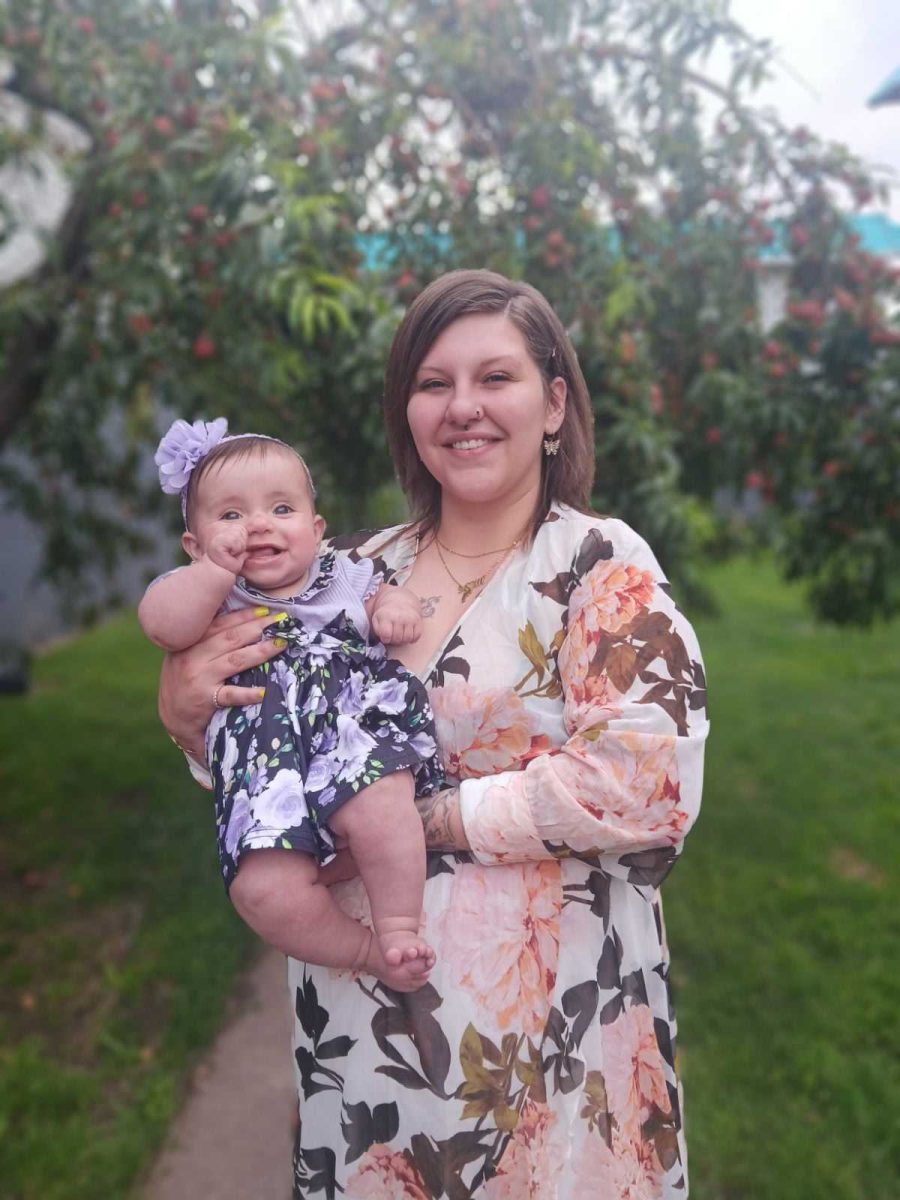
When Kaitlyn Roush enrolled for her first semester at OCCC this fall, she carried more than books and a laptop – she carried a story of survival, transformation and purpose born from one of the darkest chapters of her life.
Roush’s path to higher education began in a place few would associate with college dreams: the Dr. Eddie Warrior Correctional Center in Taft, Okla.
“I knew after I had completed my GED in prison that I wanted to pursue higher education,” she said. “A friend gifted me a laptop, and that opened the door.”
Today, Roush is pursuing a degree in behavioral health sciences, determined to turn her past into a tool for helping others.
“I want to work with the downtrodden, the forgotten and the undesirable,” she said. “I want to give them a hand up in this world, when so many other people look down on them.”
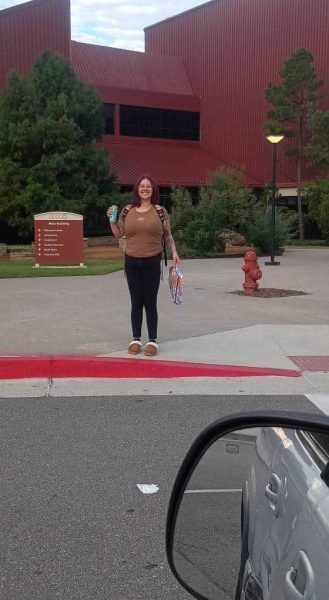
Roush’s journey began in February 2020, when she was incarcerated at the age of 22 for domestic assault. She spent months in the Oklahoma County jail, confined for 23 hours a day in a two-person cell shared with two other women.
“On weekends, it was 24 hours,” Roush said. “That confinement exacerbated my depression, and I still get anxiety if I must stay in one room for more than a few hours.”
After months of delay due to the pandemic, Roush was transferred to Eddie Warrior. When the virus reached the prison, it spread rapidly.
“When the women started falling sick, COVID was still so new that the institution didn’t know how to care for these women,” she said, “so they decided not to care for them at all.”
Roush said the first women to show symptoms were moved to the gymnasium – an area with no air conditioning, no running water and no medical supplies.
“It started with a group of about 10, but within three days, it was the whole population of 700 women,” she said. “We were sick, hungry and scared.”
When the prison’s staff stopped coming to work out of fear, inmates were largely left to fend for themselves.
“The women in the gym were taking care of each other the best they could – cleaning throw up and feces off their neighbors,” Roush said. “It was unity in the middle of chaos.”
Two women at the facility, Deanna Thomas and Vernita Watts, lost their lives during the outbreak. Roush said their deaths still weigh heavily on her, and she hopes sharing her story will keep their memories alive.
Roush noted that inmates are legally protected from cruel and unusual punishment, a protection she said was ignored during the outbreak.
“The complete disregard of us as people was really disheartening,” she said.
Roush recalled that only after public outcry and protests outside the prison did state officials send medical supplies. By that point, “the cough drops and Tylenol were not needed anymore,” she said. “The virus had long passed.”

Upon her release from prison after spending 11 months behind bars, Roush faced another battle – rebuilding her life.
Roush moved in with her mother following her release, and her mother’s boyfriend helped her find a job. As she began rebuilding her life, she said, those around her began telling her how proud they were of the changes she was making – which, she said, “meant everything” to her.
But Roush knows that not everyone leaving prison has that kind of support.
According to Roush, people leaving prison are expected to complete a long list of requirements within 48 hours – reporting, paying court costs and more – yet are given no transportation, no resource list and only $50 before being sent out the door.
Roush believes reform should begin with pre-release care plans designed by social workers to help inmates transition successfully into society. She argues that people leaving prison should have a clear plan in place – where they will stay, how they will get transportation and where they can find clothing and employment. She believes those reentering society deserve support, not continued punishment.
Historically, Oklahoma has incarcerated women at a higher rate than almost any other place in the world, a trend that has since motivated Roush to pursue a career in behavioral health care. She hopes to work in peer recovery and outreach, focusing on young adults at risk of incarceration as well as those reentering society.
According to Roush, incarceration often becomes generational, with formerly incarcerated people and even their children facing a heightened risk of ending up back in the system.
“If we could stop it at the beginning and help them at the end, we’d have a better society,” she said.
Her suggestions for prevention include mentorship programs and community-based mental health and substance abuse services.
Roush said that trauma is common among people who end up in the criminal justice system, noting that better access to counseling and community resources could change their trajectories. She emphasized the need for programs designed specifically to prevent incarceration.
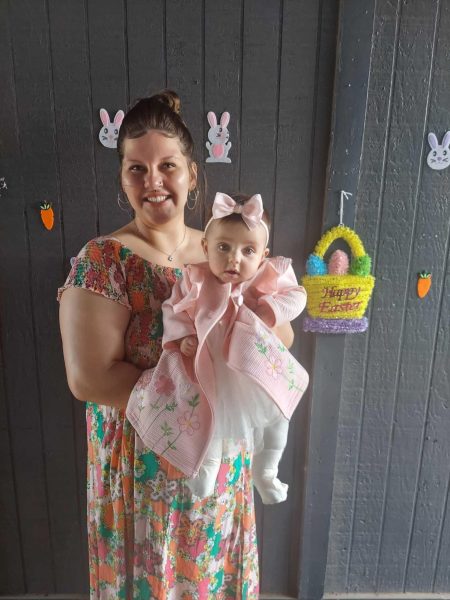
Despite everything she endured, Roush said her biggest takeaway is the power of empathy.
“When we all got sick and realized nobody was coming to help us, we really did band together,” she said. “If one person didn’t have something, the next person did. We took care of each other.”
Roush reflected on what she wants people to take away from her story.
“Treat people like people,” she said. “No matter where they’ve come from or what they’ve done, you’re not on this earth to judge somebody else’s experience. If you ever find yourself judging someone, ask instead, ‘What can I do? How can I help?’”
For Roush, those words aren’t just advice – they’re a mission statement.
“I saw a vulnerable group of people who were underrepresented and disregarded,” she said. “And that didn’t sit right with me. I knew I had to be the change I wanted to see.”
Editor’s Note: Roush has asked that this story be dedicated to Deanna Thomas and Vernita Watts, the two women who lost their lives to COVID when they were incarcerated with her during the early months of the pandemic.

Abbey • Dec 5, 2025 at 11:31 pm
So proud of you Kaitlyn. You come such a long way, and I pray God opens every door for you to accomplish your goals! For you and the women still struggling along the way. May God bless your hands, and allow you to see through his eyes.
Sandra Caldwell • Dec 5, 2025 at 10:40 pm
Kaitlyn thank you for your post. I see a future ahead of you. You seem to be a strong young woman with a good head on your shoulders, brave enough to tell your story. Most would be hiding that kind of past. But you have faced it head on and are paving a path for your future that is something to be proud of. By the way I knew your brother David he lived in the neighborhood and played with my boys. Then on down the road I worked at Western Heighrs with Max and knew his girls because they went to John Glenn with my boys. It is a small world. Sandi
Kaitlyn Roush • Dec 5, 2025 at 2:08 pm
Thank you all again for such a beautiful article! I am truly grateful to be able to share my story with you all. I hope it inspires others to continue to chase their dreams, even in the midst of chaos. Because anything in life life is truly possible, and you really can make a difference in this world!