













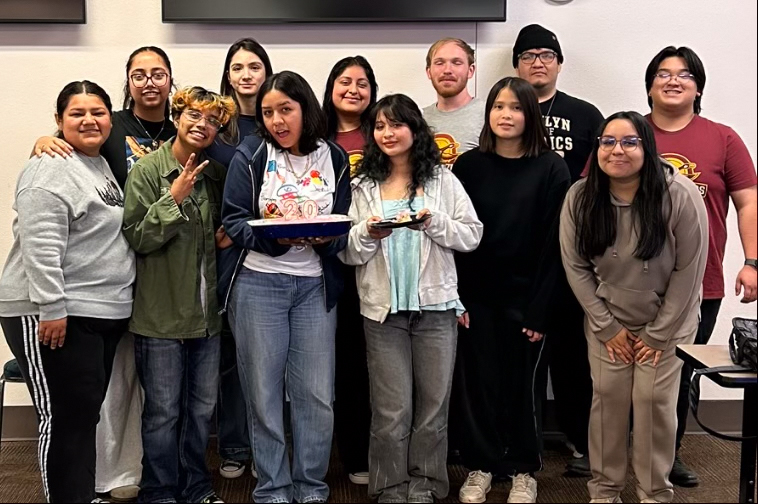



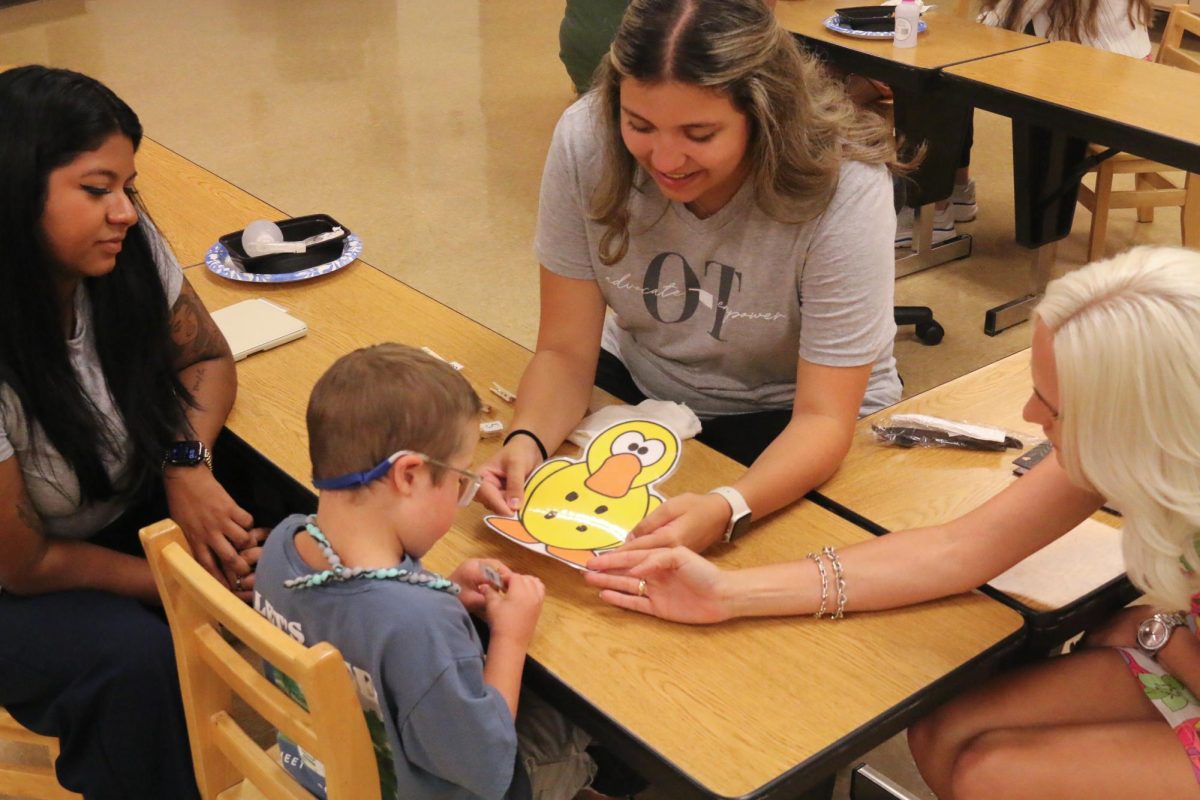
For four days this summer, the OCCC Health Professions Center became more than a classroom building. It became a place where children practiced communication, built confidence and developed motor skills while college students gained firsthand experience working with future clients.
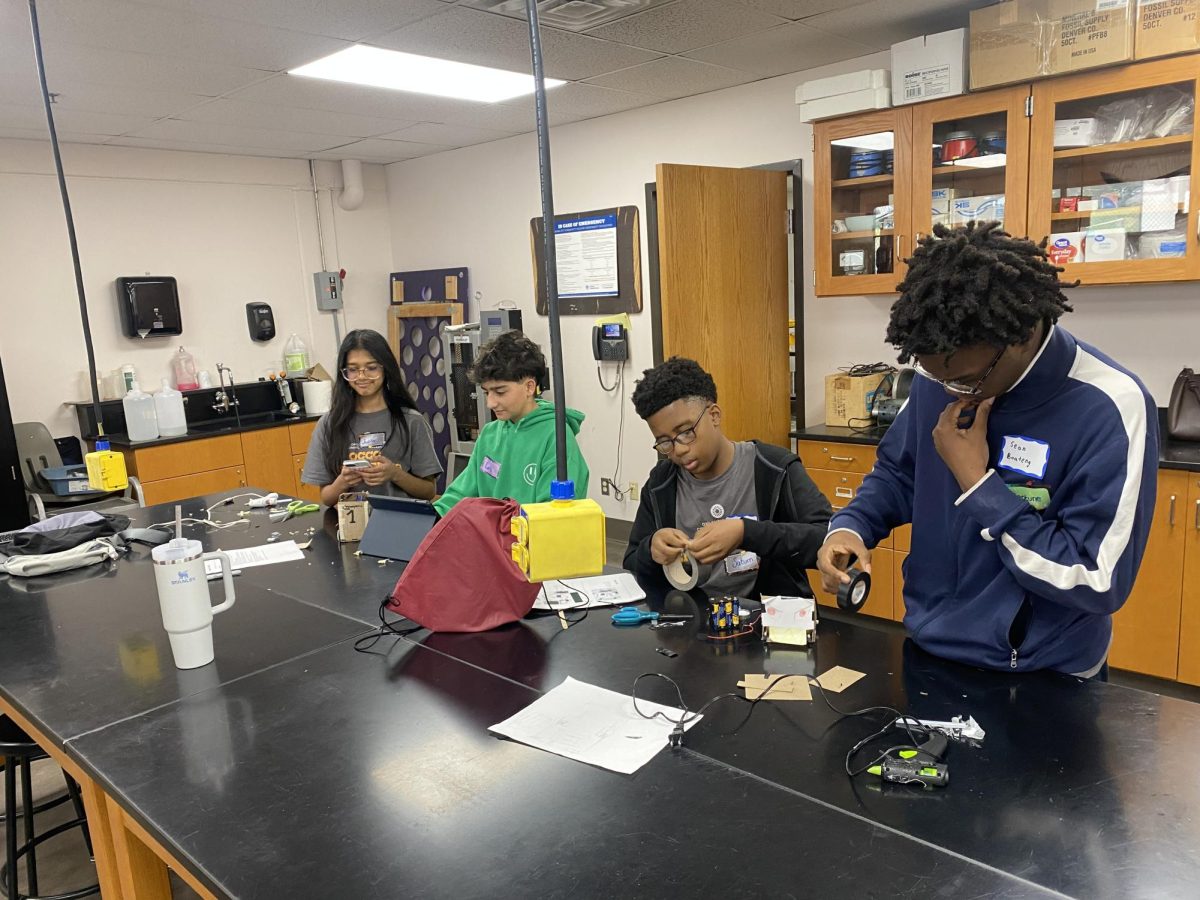
The Trailblazers Speech-Language Pathology and Occupational Therapy Assistant Collaborative Camp for Kids brought together OCCC students, faculty and local families for a program designed to help children develop communication, social and motor skills through play-based activities.
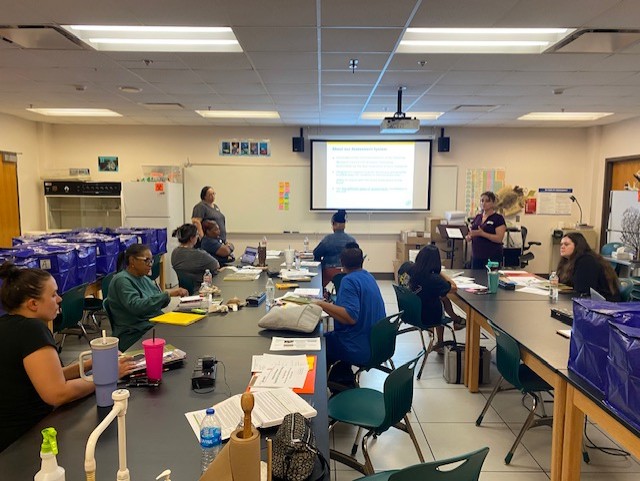
The camp – the first of its kind at OCCC – was created to give speech-language pathology and occupational therapy assistant students the opportunity to work directly with children before beginning their clinical placements.
“We collaborated and decided that would be a wonderful crossover of disciplines from the speech-language pathology students and the occupational therapy assistant students to work together,” said Douglas Ball, professor in the OTA program and academic field coordinator. “Because once they finish our program and graduate and are practitioners out in the community, they’ll be collaborating, working together in schools and in pediatric outpatient clinics. So why not give them real-life experience while they’re in the program?”
The idea originated with the SLPA program, whose faculty had been looking for ways to give students more hands-on experience.
“Feedback over the years from my students once they do get to go out to a clinical experience is that they really wished they’d gotten at least some experience with that before they got sent to their clinical,” said Sarah Baker, director of the SLPA program at OCCC. “We were trying to figure out, ‘Is there a way that we can do this?'”
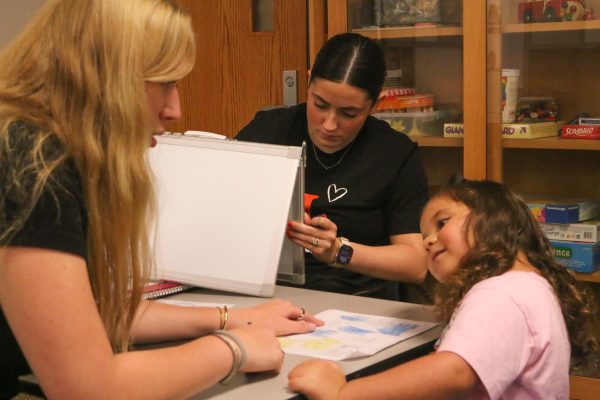
The response from students exceeded expectations.
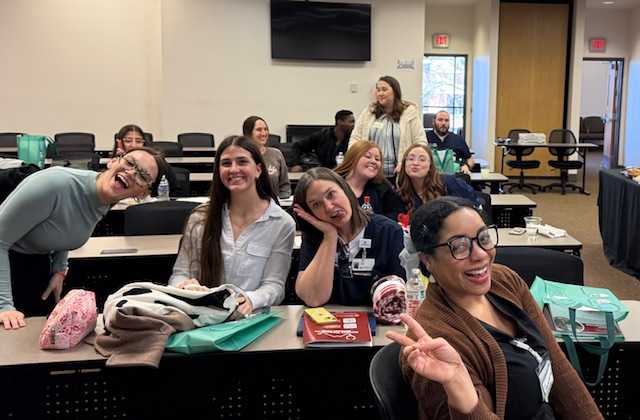
“Out of 27 students where this class takes place, 20 came. I’ve had students who have traveled three and four hours to get here – they’re very committed to doing it,” Baker said. “The feedback from them right now is that they are so happy that they did.”
Throughout the week, campers participated in activities centered around a space theme. Faculty adapted classic children’s books and games into therapeutic exercises designed to improve speech, language, problem-solving and motor skills.
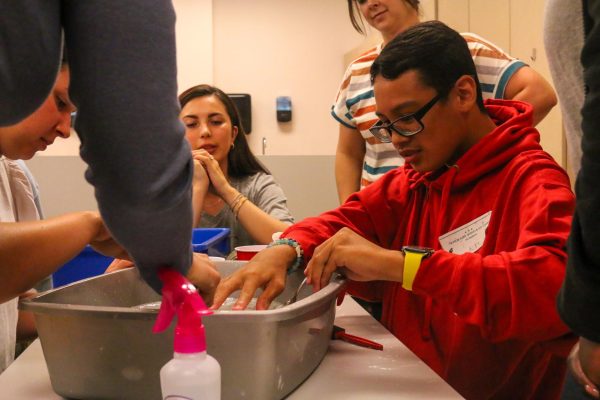
One activity had children digging objects from blocks of ice. While it looked like a simple game, it was carefully designed with therapeutic goals in mind.
“It was a fun, motivating way to develop what we call in-hand skills – (using) the muscles of the hand to help them be able to use tools better,” said Mary White, director of the OTA program on campus.
The activity also encouraged children to think critically while practicing communication.
“They had to problem solve,” Ball said. “They had to try, ‘Oh, that didn’t work. I’m going to try this tool.’ So, we’re looking at that cognitive decision-making process that a child needs to develop in order to complete their daily life skills.”
Parents said the camp provided an opportunity that is often difficult to find during the summer.
Tarah Palacio enrolled both of her children, who have autism, after learning about the camp through OCCC. Her son is nonverbal and communicates using an augmentative and alternative communication device.
She said the camp helped him become more comfortable interacting with unfamiliar people.
“My son, he does not really like to reach out to new people and try to communicate with them,” Palacio said. “He’s opened up throughout the camp and has been interested in all the activities and them (other campers) learning how to use his device and them learning from him. Both sides have learned something from the camp.”
She hopes the program continues and expands in future years.
“I think if we could do this again next year, it would be wonderful. Maybe even add another age group,” Palacio said.
Michelle Pritchard enrolled her 5-year-old son after seeing information about the camp on Facebook. Her son receives speech and occupational therapy during the school year, but summer services are more limited.
“It was really nice to kind of get condensed therapeutic services but also have a little bit of the camp experience that we don’t normally get to experience,” Pritchard said.
She has already noticed changes in her son’s confidence and communication.
“We’ve definitely seen an increase just being comfortable with the people here – using his device more, using his words more, getting more comfortable with adults outside of his norm,” she said.
Pritchard also appreciated that OCCC students gained hands-on experience alongside faculty.
“I love that the students get to learn and have that hands-on learning with the kids before they get into a clinical program,” she said. “They’re able to do that in a clinical setting, and their professors give them feedback on the actual experience of what they’re going to do.”
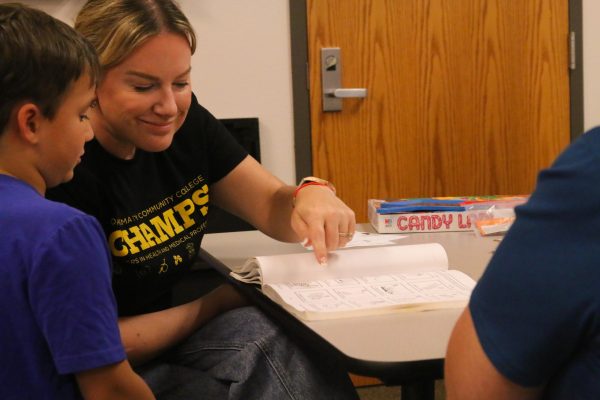
Faculty members agreed that watching their own students develop professionally became one of the highlights of the week.
“To me, my favorite part is seeing the growth in my students and them coming in and being a little unsure of themselves, and then by the end, they’ve stepped up, they’ve met all their requirements, and they just blew me out of the water,” Baker said.
Baker described this year’s camp as a successful pilot program and is already planning improvements for next summer.
“We’ve already got a list,” Baker said with a laugh. “Every day, we were writing stuff down.”
For the families who participated, however, the greatest hope is simply that the camp returns.
“I think that this is a beautiful start,” Pritchard said. “Hopefully, we’ll get to come again next summer if they offer it.”
As the first Trailblazers camp came to a close, organizers said they were encouraged not only by the children’s progress but also by the confidence their own students developed through meaningful, real-world experience – an outcome they hope to build upon in the years ahead.