


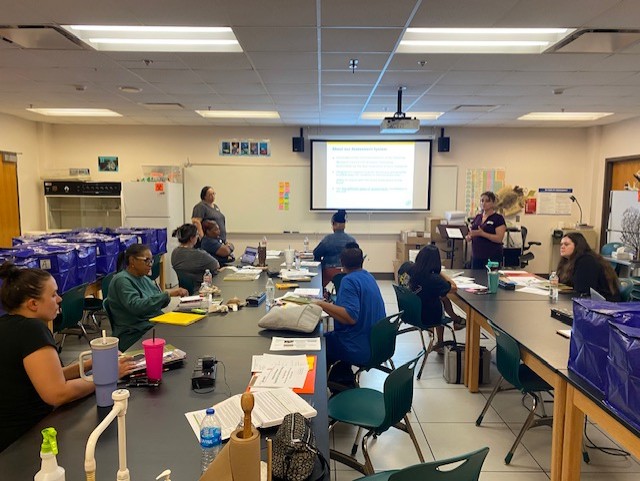



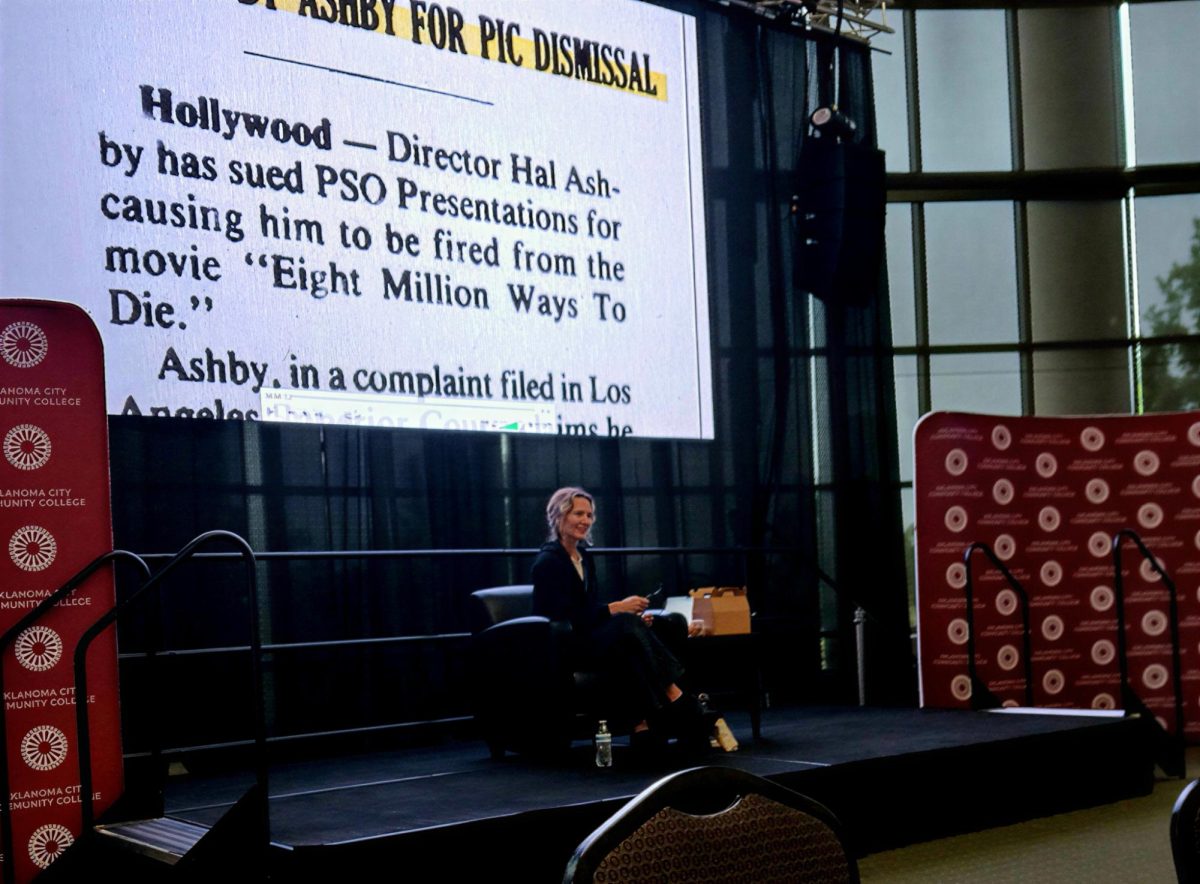






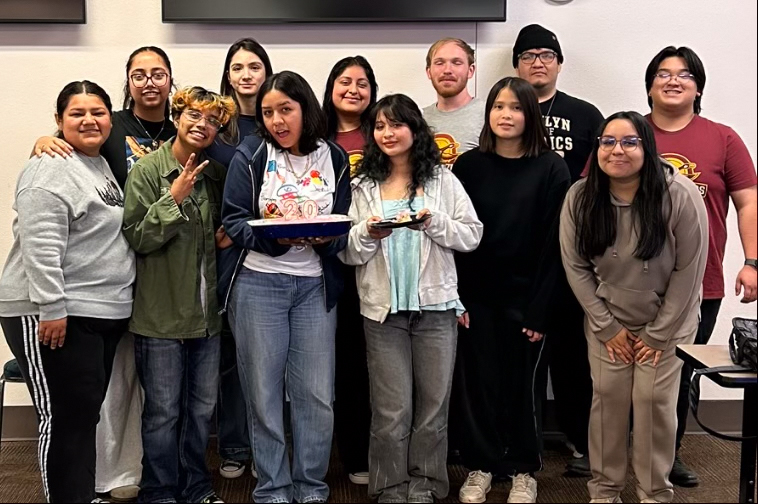


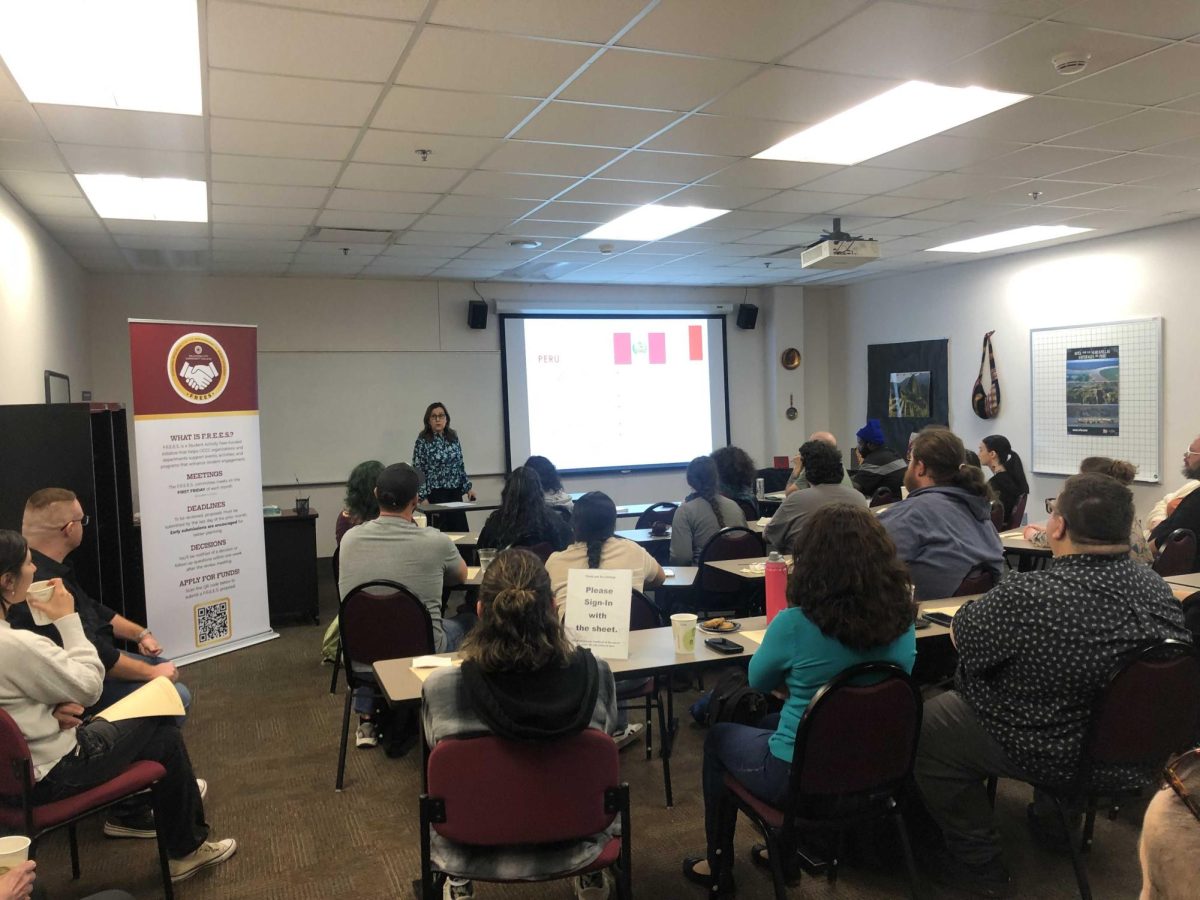
Students and faculty gathered at OCCC for an engaging cultural presentation highlighting the history, geography and traditions of Peru as part of the World Languages and Cultures Center’s ongoing “Coffee and Conversations” series. The event featured OCCC Modern Language Coordinator Hilde Votaw as the special guest speaker.
Before the presentation began, WLCC Coordinator Chiaki Troutman welcomed attendees and introduced the purpose behind the series. “Coffee and Conversations” aims to create a space where students can explore global cultures through discussion, storytelling and shared experiences. Attendees settled in for an immersive journey through one of South America’s most culturally rich nations.
Votaw’s presentation combined personal insight, historical context and vivid imagery to introduce Peru’s diverse cultural landscape. Rather than focusing solely on historical facts, she emphasized how geography shapes everyday life across the country’s three main regions: the coast, the highlands and the Amazon rainforest.
Beginning along the coast, Votaw described Peru’s capital city, Lima, noting its unique geographic position.
“Lima is one of the few capitals in the world that sits by the ocean,” she explained while displaying photographs of the city’s coastal cliffs and districts. She highlighted Lima’s reputation as a culinary destination, adding, “If you’re a foodie, this is the place you want to explore,” referencing the city’s globally recognized food scene.
Food served as an entry point into broader cultural discussions. Votaw reminded the audience that many staples commonly associated with other countries actually originated in Peru.
“Potatoes did not originate in Ireland. They came from Peru,” she said, prompting surprised reactions from several attendees.
The comment underscored Peru’s agricultural history and the ingenuity of early civilizations that cultivated crops at high altitudes.
Moving inland, Votaw shifted focus to the highlands and the legacy of the Inca civilization. Images of ancient stone cities illustrated the engineering achievements of a society that constructed massive structures without modern tools.
“They didn’t know the wheel. It’s still a mystery how they transported those stones up the mountain,” Votaw explained while discussing Incan architecture.
She also noted how Spanish colonization reshaped the region, explaining that stones taken from Inca palaces and fortresses were later used to construct colonial churches, physically layering European influence atop Indigenous foundations.
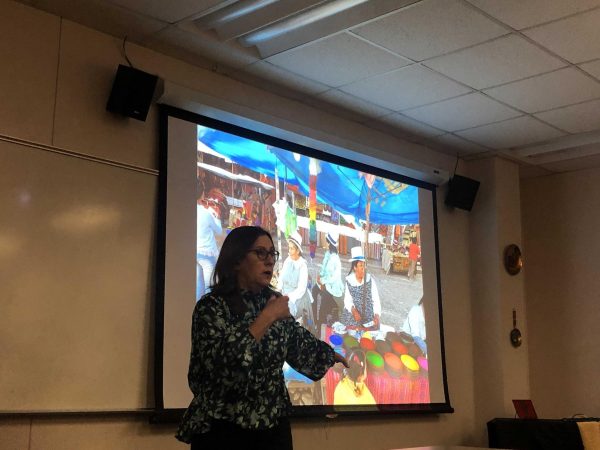
The presentation balanced historical discussion with insight into contemporary Indigenous life. Votaw shared photographs of traditional clothing, dances and homes, emphasizing how many communities continue to preserve centuries-old customs. One particularly memorable moment came when she described communities living on floating islands made entirely of woven reeds on Lake Titicaca.
Explaining how the islands must be periodically rebuilt, she joked, “When they get rotten, they leave the island, build another and move on,” drawing laughter from the audience.
Humor was used throughout the presentation, helping make complex cultural topics approachable.
While discussing Peru’s climate patterns, Votaw summarized seasonal changes simply: “We have two seasons: rain and no rain,” another line that prompted laughter across the room.
The tone shifted, however, as Votaw addressed the environmental realities facing the Amazon rainforest. Describing her experiences there, she said the environment felt “overpowering,” capturing both the immense biodiversity and the sensory intensity of the region. She also acknowledged ongoing environmental challenges, noting that parts of the rainforest are threatened by illegal mining activities.
“Sadly, some of that is being lost due to illegal mining,” she said, emphasizing the tension between economic pressures and environmental preservation.
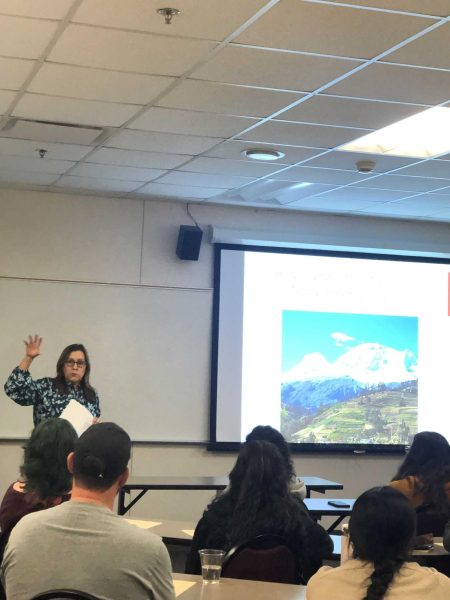
One of the most striking moments of the presentation came when Votaw discussed a devastating natural disaster connected to Peru’s mountainous geography. She recounted how an earthquake triggered a massive avalanche from Huascarán Mountain in the Cordillera Blanca range, burying entire communities and claiming more than 100,000 lives. The images and story brought pause to the room, showing both the beauty and danger of the landscape.
By the end of the session, attendees were transported from coastal cities to mountain civilizations and deep into the rainforest. The presentation reflected the broader mission of WLCC’s “Coffee and Conversations” series: fostering cultural understanding through shared learning experiences.
Through storytelling, humor and historical insight, Votaw offered more than a lecture. She provided a window into the complexity and resilience of Peruvian culture. Events like these, Troutman noted in her introduction, encourage curiosity about the wider world – and judging by the engaged audience, the conversation about Peru is likely to continue well beyond the event itself.