
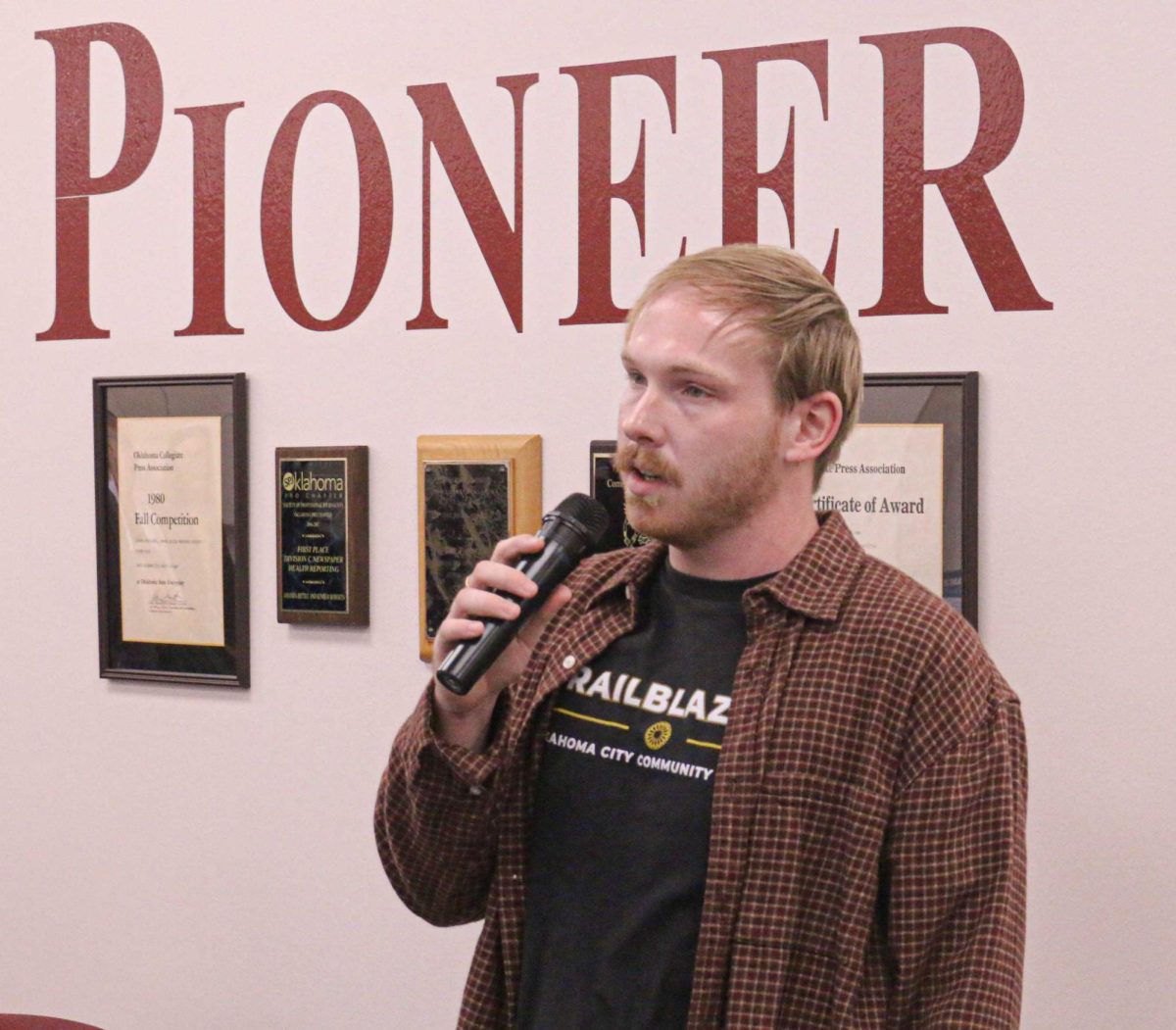





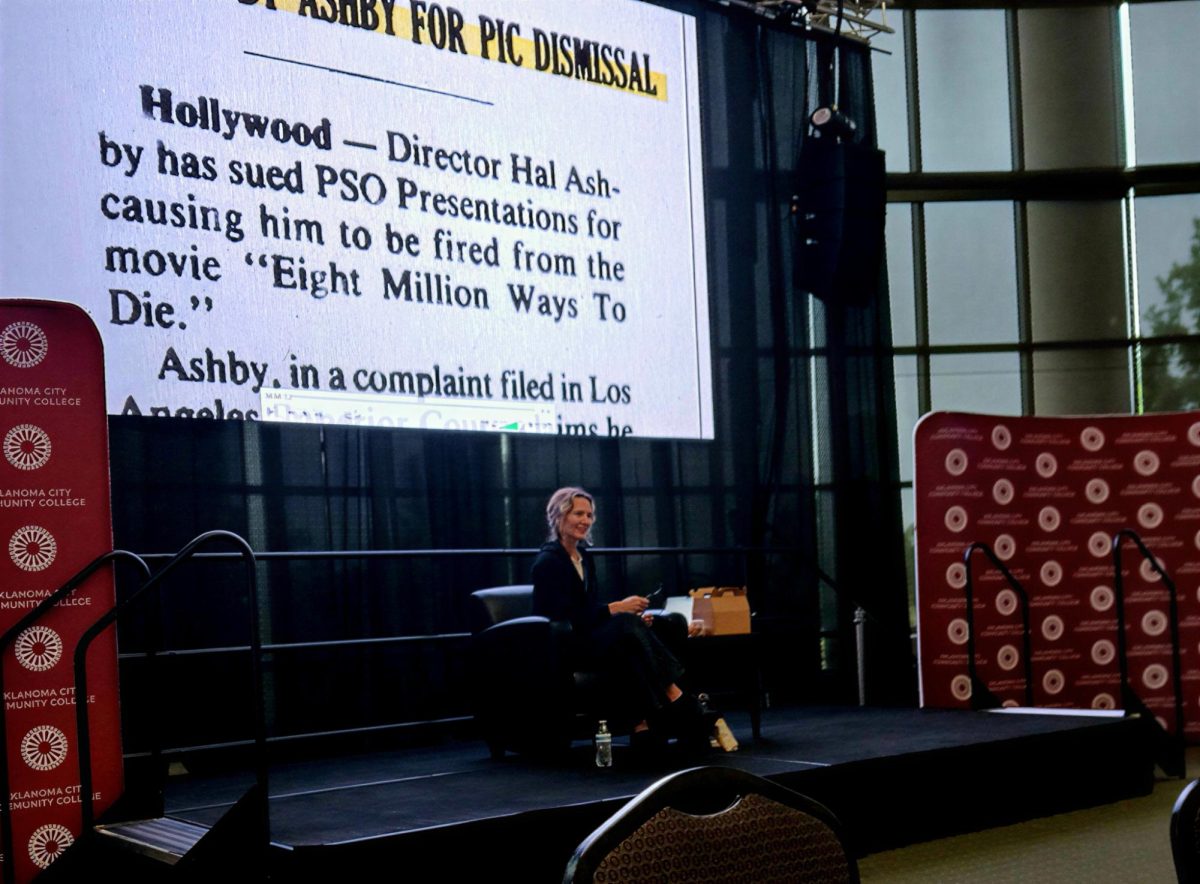






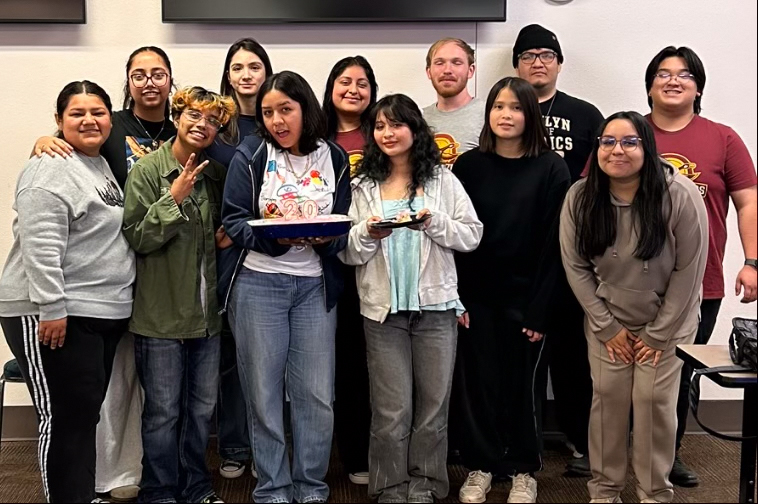



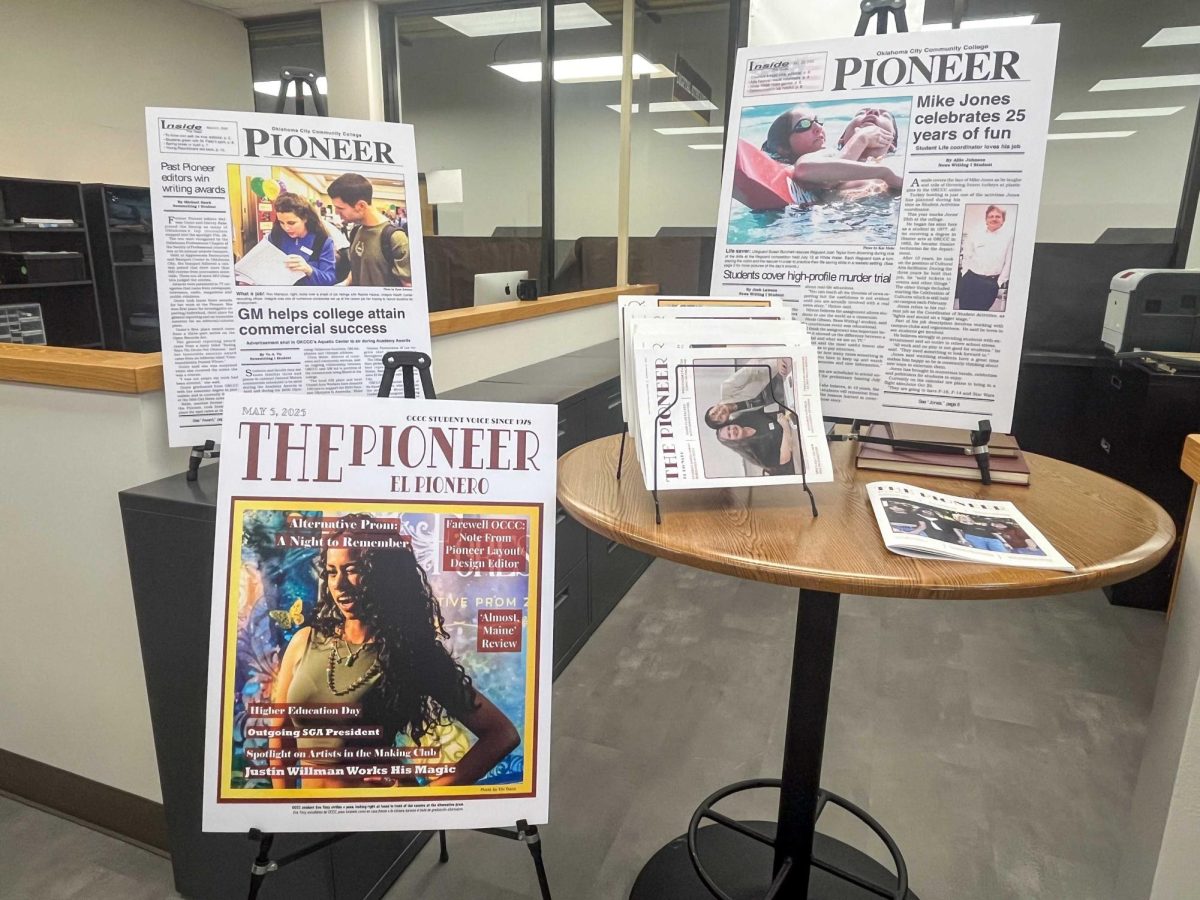
Editor’s Note: Founding Pioneer Staff Advisor Sue Hinton reflected back on her long tenure with the newspaper when she visited the newsroom during the recent open house that The Pioneer hosted in recognition of its 50th birthday.
By Jonas McGee
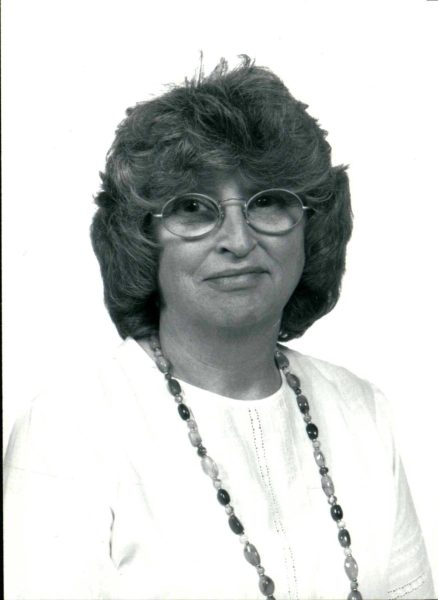
When OCCC hired a 23-year-old English graduate student in 1972, few could have predicted that she would later redefine the college’s news outlet. But when Sue Hinton returned to OCCC in 1977 after a brief move to Minnesota, she stepped into a role that would transform the school’s newspaper from a marketing publication into an independent voice for the campus’s student body.
Hinton had no formal journalism training at the time. She had been hired five years earlier as an English instructor and was just beginning her teaching career. After returning to Oklahoma in 1977, she found the college needed a new instructor for its news writing course. The previous professor didn’t want to teach the class anymore, and Hinton agreed to take it on, joking that she stayed “one page ahead” of students in the textbook. But the shift quickly reshaped her career.
Her husband, longtime journalist Mick Hinton, helped nudge her further into student media. When he learned her students weren’t writing for the college newspaper, he encouraged her to change that. The result was a formal proposal to restructure the publication, and the proposal came with a key requirement: The newspaper needed to be independent.
Then-OCCC President Dale Gibson agreed, and The Pioneer became an independent student newspaper from the beginning of Hinton’s involvement.
“It was critical that it be an independent student newspaper,” she emphasized.
That decision set the tone for decades of student reporting.
In the early years, the staff was small. OCCC had no dedicated journalism degree – only a broadcasting program – so students joined from a wide mix of majors.
“We had editors who were sociology majors or English majors. We had one who was an accounting major,” Hinton recalled, noting that others came from broadcasting, which was the closest thing to a journalism degree that OCCC offered at the time.
What the students lacked in formal training, they made up for in enthusiasm. They worked 10 hours per week, while the editor worked 15.
Despite limited resources, the team built a strong foundation. Students reported on campus with a hyperlocal focus and developed a sense of community through the newsroom. Hinton said that for many, The Pioneer became a reliable anchor during their college years – especially for first-generation or older students who found a supportive cohort in the newsroom.
The paper began publishing weekly, using the campus print shop. In time, Hinton and her students built a case for printing on newsprint instead of standard paper, allowing for more space and a more professional layout. Eventually, issues were printed at The Edmond Sun’s facility, giving The Pioneer the appearance of a true newspaper.
The newsroom itself moved several times as the college grew. Early on, students worked in small rooms throughout the Main Building. In 2010, the space now occupied by The Pioneer newsroom opened after the pottery lab relocated. The move was significant, giving students a larger, more professional environment adjacent to the media writing classroom. The college even purchased a new refrigerator and microwave for the newsroom – small gestures that meant a great deal to students who often brought lunch from home.
“Students loved that,” Hinton said.
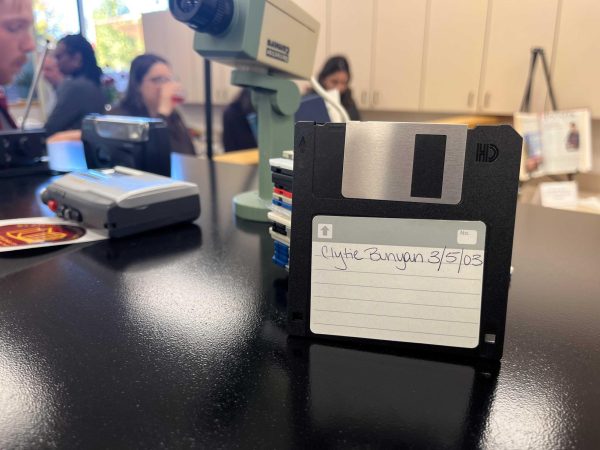
Over the years, The Pioneer employed a number of students who went on to enjoy successful careers. Hinton named several former reporters who became professional journalists, including OCCC Hall of Fame inductees Clytie Bunyan and Antonio Delgado.
Hinton’s decades with The Pioneer came with countless memories, but one moment late in her tenure stood out: the staff’s coverage of a formal ceremony welcoming Jerry Steward as the 10th president of the college.
The ceremony took place the day before the paper went to print, and the staff worked extra hours to ensure the story appeared on the front page the following morning. Hinton recalled the pride she felt when the student editor responded to the headline that Hinton had suggested by insisting, “We can do better than that!” and coming up with a much better replacement on her own. That exchange captured the spirit Hinton had worked so hard to build.
When asked what she loved most about her role as staff advisor for the student newspaper, Hinton said she valued guiding students into professional life, even those who didn’t pursue journalism careers. She pointed out that the skills they learned – writing, interviewing, meeting deadlines, understanding the audience – were highly transferable.
Hinton’s advice to students debating whether to join The Pioneer reflects the philosophy that helped shape the newspaper from the start: “Do it,” she declared. “Everything you learn in journalism is a wholly transferable skill.”
What endures from Hinton’s years with The Pioneer is her commitment to helping students grow. She built a newsroom where learners from any major could develop skills they would use throughout their lives. Her confidence in the power of student storytelling – and the independence needed to do it well – continues to influence the paper to this day.